
Knee & Lower Limb
Knee Pain & Arthritis
Knee osteoarthritis is the most-requested regenerative case we see. Most patients arrive after a surgeon mentioned eventual knee replacement — and they aren't ready to give up their own joint.

Why regenerative therapy applies
The arthritic knee is stuck in low-grade inflammation with progressive cartilage loss. Mesenchymal stem cells and their exosomes act on that environment — calming inflammation and signaling for repair — which is why early-to-moderate arthritis responds far better than a bone-on-bone joint.
Are you a candidate?
Best for Kellgren-Lawrence grades I–III. If your knee is Grade IV and structurally collapsed, we'll tell you honestly that the response is likely limited.
We turn patients away when the evidence says a therapy won't help. If a different path — or no treatment — serves you better, we'll say so at your consultation, before you've spent anything.
→Where is your knee right now?
Candidacy depends on how far along you are.
Regenerative therapy does the most in the earlier stages, while the tissue can still respond. Here's the honest map — and why waiting works against you.
Stage 1 · Early
Occasional ache after activity; imaging shows mild wear.
Strong candidate
Stage 2 · Moderate
Pain with daily activity; visible joint-space narrowing.
Strong candidate
Stage 3 · Advanced
Frequent pain and stiffness; significant narrowing.
Good candidate — realistic goals
Stage 4 · End-stage
Constant pain, bone-on-bone.
Limited response — we'd likely say no
Not sure of your stage? Bring your X-ray or MRI report to your free consultation and we'll read it with you — and tell you plainly which column you're in.
→Honest comparison
Regenerative therapy vs. knee replacement.
We're not anti-surgery — when a joint is truly end-stage, replacement is the right answer, and we'll tell you so. But if you're earlier than that, here's what the two paths actually look like.
→What to expect
Real patients. Honest timelines.
Regeneration is a process, not an event — most patients notice meaningful change by 8–12 weeks, with continued improvement over months. Backed by a meta-analysis of 35 studies and 2,385 patients showing improved pain and function.
For most knee cases, this is the Restore Protocol →★★★★★
"I was trying to avoid surgery for my knee. The stem cells I got at Apex helped so much — I haven't felt this good in years."
Verified Google review
★★★★★
"I got stem cell treatment for my chronic knee pain and it was a night-and-day difference after a couple of months."
Verified Google review
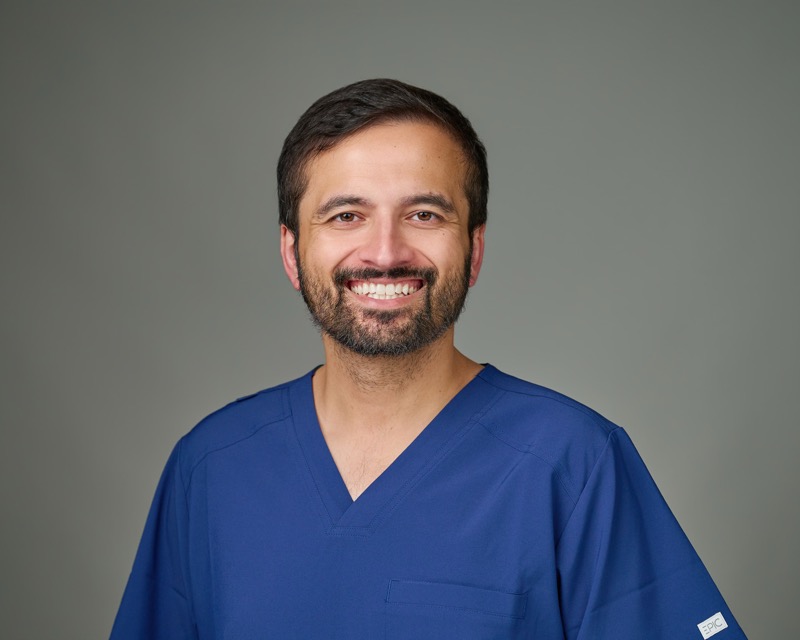
Farhan Abdullah, DO
→Your options
Treatments we'd consider.
?Questions patients ask
Straight answers.
Can stem cells help me avoid knee replacement?
For many early-to-moderate arthritis patients, regenerative therapy relieves pain and improves function enough to delay or avoid replacement. Bone-on-bone Grade IV knees respond less. We give you an honest read at consultation.
Should I just wait and see if it gets worse?
Waiting is the one thing that works against you. These therapies do the most for early-to-moderate joint and tendon disease — the window where tissue can still respond. Once a joint collapses to bone-on-bone, the evidence for regeneration drops and surgery becomes the honest answer. If you're a candidate today, you may not be in two years. A free consultation gives you a clear read on where you are right now.
How much does treatment cost?
Stem cell therapy at Apex starts at $4,500 per joint (typically $4,500–$7,500); physician-performed PRP from $1,500; exosome therapy from $4,500. Stem cell protocols include PRP and a red light package in one inclusive fee. Your exact price is set at your free consultation, with HSA/FSA and financing available.
Is it covered by insurance?
No. U.S. insurers classify regenerative therapy for orthopedic and systemic conditions as investigational, so it is out of pocket. IV ketamine is usually self-pay. We keep care accessible with transparent pricing and financing.
Is it safe?
Serious adverse events are rare. The most common effects are temporary soreness or swelling for a few days. Every treatment is physician-performed under sterile, image-guided technique, and we screen candidacy carefully first.
Free consultation
Find out if you're a candidate.
A private consultation with Dr. Abdullah about your goals, your imaging, and your options — with an honest answer and a clear price. No obligation.
- Honest candidacy — we'll tell you if it won't help
- A clear, itemized price before you commit
- 0% financing · HSA / FSA accepted
Prefer to talk now? Call (972) 768-2328.