
- Commercial insurance does not cover PRP or stem cell injections in 2026, and won't reimburse retroactively.
- PRP for a joint or tendon at Apex runs $1,500 to $2,000 per session.
- At Apex, a single-joint stem cell injection is a flat $4,500, covering the physician evaluation, the ultrasound-guided injection, PRP from your own blood, a Myers cocktail IV, and follow-up at 3 and 6 months. Adding exosomes is +$2,000 per joint.
- HSA and FSA funds can usually be applied. CareCredit and direct financing are available.
- We don't run 'membership' bundles, today-only pricing, or volume packages.
- The right question isn't 'is this cheap.' It's 'is this worth what it costs compared to the alternatives.'
We get the cost question on almost every consultation call. It deserves a direct answer, not a "we can talk about that during your free assessment" deflection.
The pricing on this page is the pricing we use. It's not promotional. There are no today-only deals, no membership rates, and no volume packages. If a clinic offers you any of those three, you're shopping at a sales operation, not a medical one.
This guide covers the actual dollar numbers, the insurance reality, the HSA/FSA pathway, the financing options, the value comparison against alternatives, and the honest summary of when this is worth what it costs.
Why insurance doesn't cover this (yet)
Commercial insurance, Medicare, and Medicaid currently classify intra-articular PRP, stem cell, and exosome injections as investigational. The Centers for Medicare and Medicaid Services (CMS) has historically declined coverage for cellular therapy in orthopedic indications outside of approved clinical trials. Most commercial plans follow CMS lead.
This isn't unique to small clinics. Major academic medical centers running the same protocols don't get them reimbursed either. The issue is regulatory and economic, not a clinic-level decision.
The CPT code reality, in plain language: there isn't a clean, reimbursable CPT code for a meaningful regenerative protocol. The codes that exist (such as 0232T for PRP) are categorized as investigational by most payers, with reimbursement rates at or near zero. Stem cell injection codes for orthopedic indications don't exist in a meaningfully reimbursed form. Some clinics bill under joint injection codes (20610 and similar) and then bill the patient separately for the "biologic product," but this practice has been the subject of insurance fraud actions and is not something we participate in.
What this means for you:
We do not bill insurance for these procedures.
We do not have you submit claims with the expectation of reimbursement. The reimbursement rate is functionally zero.
We can provide an itemized superbill if you want to submit it for your own records or for HSA/FSA documentation.
If you have a high-deductible plan and have already met your deductible, the calculation doesn't change. The procedure remains non-covered.
This may change. There are advocacy efforts to expand coverage as the evidence base matures, and a few states have begun pushing for limited Medicaid coverage of PRP in specific contexts. We'll update this page when policy actually shifts.
Our pricing in plain numbers
The numbers below reflect our 2026 pricing. They are the starting point for the conversation, not the final number. Your specific protocol cost is documented in writing during your consultation, after we've reviewed your imaging and determined what's actually appropriate.
Consultation
- New patient consultation, including second-opinion visits: free.
- Follow-up consultation: included for treatment patients.
- Telehealth follow-up: included.
PRP
- PRP, joint or tendon: $1,500 to $2,000 per session.
- PRP, hair restoration: $1,200 per session, or $3,000 for a series of three.
Image guidance and post-procedure follow-up included.
Stem cell, exosome and Muse cell therapy
- Single joint, allogeneic MSC injection: a flat $4,500.
- Each additional joint, same visit: from $3,000.
- Adding exosomes to a stem cell injection: +$2,000 per joint.
- Softwave add-on for stem cell patients: six sessions for $999, available only alongside a stem cell injection. This is add-on pricing, not our standard Softwave package.
- Exosome therapy, single joint: $2,500 to $4,000 per treatment.
- Exosome therapy for hair restoration: from $4,000. Aesthetic and skin exosome treatment: $2,000 to $3,500.
- Spine work, and cellular adjuncts to a surgical procedure (in coordination with a surgeon): quoted at consultation after imaging review.
- IV systemic stem cell therapy (selected indications): quoted on a per-case basis after workup.
- Dezawa Muse cell therapy: from $15,000, single-dose protocol.
The $4,500 single-joint stem cell fee includes the physician evaluation, the ultrasound-guided injection, PRP from your own blood, a Myers cocktail IV, and follow-up at 3 and 6 months.
Adjunct modalities
- Softwave shockwave, single area: from $249 per session. Typical course of 4 to 6 sessions.
- IV ketamine: $500 per infusion, $2,700 for a six-infusion series, and $400 per follow-up infusion.
Diagnostic workup
If you need imaging or labs that you don't already have, we'll order them and the cost depends on your insurance for those services (imaging and lab are often insurance-covered even when the regenerative procedure is not). We do not mark up imaging and labs.
If you don't have insurance and need imaging or labs cash-pay, we'll quote those separately at our partner facilities' cash rates, which are typically substantially lower than the chargemaster rates patients see on EOBs.
Pricing ranges, not single numbers, on purpose
You'll notice some prices are ranges. That's not bait-and-switch. The single-joint stem cell injection is a flat fee, but exosome treatment, additional joints, and combination plans depend on dose and on imaging severity. We give you a single number after the consultation, in writing, before you commit.
The factors that move the number within the range:
Product dose, for exosome treatments and combination plans.
Joint count. Each additional joint treated at the same visit is from $3,000.
Image guidance modality. Ultrasound is the standard image-guidance modality for joint, tendon, and spine injection at Apex; the equipment time is the main per-procedure variable.
Whether exosomes are included.
Whether an IV component is part of the protocol.
What we never do:
Quote a price that goes up after you decide.
Add charges for "follow-up access" or "membership."
Sell you a second joint to get a "package rate."
Charge separately for image guidance or basic post-procedure visits.
Financing options
For patients who need to spread the cost, we work with:
CareCredit. Standard medical financing card. Promotional 0% APR options of 6, 12, and 24 months depending on the amount. After the promotional period, the rate jumps to typical credit card APRs (around 25% to 30% APR), so the rule of thumb is: if you can pay it off in the promotional window, the financing is free; if you can't, the math gets ugly fast. We always show you both numbers.
A direct medical financing partner (United Medical Credit, Prosper Healthcare Lending, or similar) that handles longer-term repayment. We quote the APR in writing before you sign. Terms typically run 12 to 60 months with rates depending on credit.
HSA and FSA funds. Eligible for most plans when accompanied by a physician's written treatment plan and a superbill. Check your specific plan administrator. The medical-necessity documentation we provide is generally sufficient for HSA reimbursement under IRS guidance.
We never offer financing where you can't see the total cost over the life of the loan. We never make a payment plan contingent on signing up that day.
A common pattern we see in the industry: "0% financing for 24 months" pitched as if it's free money, with the small print revealing a 28% rate on the unpaid balance if you don't clear it in the window. Read the financing terms before you sign. We'll point them out to you.
HSA and FSA, in detail
Health Savings Accounts (HSAs) and Flexible Spending Accounts (FSAs) are tax-advantaged accounts that can be used for qualified medical expenses. The IRS defines what's qualified under Publication 502. The relevant language for regenerative medicine:
Medical care includes expenses for the diagnosis, cure, mitigation, treatment, or prevention of disease, or for the purpose of affecting any structure or function of the body.
That's broad. It includes most procedural medical care, including procedures that aren't covered by insurance. Regenerative medicine procedures generally fall within the definition when they're for a specific medical indication recommended by a licensed physician.
What you need:
A physician's written recommendation for the procedure. Apex provides this as part of the treatment plan.
An itemized receipt or superbill showing the procedure and cost. Apex provides this.
Your HSA or FSA administrator's documentation requirements, which vary slightly.
What may complicate eligibility:
Cosmetic procedures don't qualify. Regenerative procedures with a defined medical indication do.
"Wellness" framing can complicate things. If the procedure is documented as treating osteoarthritis, that's clearly qualified. If it's documented as "longevity therapy," some administrators push back.
Some HSA administrators interpret eligibility more strictly than others. Larger administrators tend to be more flexible; smaller third-party administrators sometimes require additional documentation.
Practical guidance: pay out of pocket first, get the documentation, submit for reimbursement. If your administrator denies the claim (rare for a legitimate medical procedure with a documented indication), we can help you produce additional documentation or appeal.
Why we don't sell "memberships"
A few regenerative clinics in the metroplex market memberships at $5,000 to $25,000 per year. The pitch is "discounted access" to multiple modalities. The math, when you look at it, almost always favors the clinic.
Membership models have a few specific problems:
They incentivize the clinic to keep recommending services, because you've prepaid for access. Whether or not those services are clinically warranted, the financial logic of the model pushes toward using them.
They obscure the actual cost of any specific procedure. Patients don't know what they're paying for each modality, only the bundled annual price.
They reduce the patient's flexibility. If you decide six months in that you'd rather get a particular procedure elsewhere, your sunk cost in the membership is a psychological anchor that's hard to ignore.
They're often pitched as a "lifestyle" benefit rather than a medical one, which is the wrong frame for medical care.
We charge for what you need, when you need it. If you only need one PRP round per year, you only pay for one PRP round. If your case requires more, we discuss that in writing before you commit.
If you've been pitched a membership at another clinic and want a second opinion on whether the protocol it includes is even appropriate for you, request a consultation.
Tax considerations
For some patients, regenerative medicine costs are deductible as medical expenses on federal taxes if total medical expenses exceed 7.5% of adjusted gross income (the threshold for the medical expense deduction).
Quick math: if your AGI is $200,000 and your total annual medical expenses are $20,000, you can deduct $5,000 ($20,000 minus 7.5% of $200,000, which is $15,000). At a 32% marginal rate, that's $1,600 in actual tax savings.
The deduction applies to qualified medical expenses, which generally include regenerative procedures performed under a physician's care for a specific medical indication. The same documentation that supports HSA/FSA reimbursement supports the deduction.
This is general guidance, not tax advice. Talk to your CPA before assuming the deduction will apply. The rules around itemizing, the standard deduction, and tax-year-specific changes can materially affect what you actually save.
The cost-vs-value question
The thing patients are really asking when they ask about cost: is this worth what it costs?
The honest framing requires comparing it to the alternatives, not to nothing.
A patient with moderate knee OA has several realistic paths:
Continued conservative care. PT, weight management, occasional steroid injections, OTC and prescription anti-inflammatories. Annual cost: $1,500 to $4,000 in copays, PT visits, OTC medications, and steroid injections. Quality of life: gradual decline as cartilage continues to thin. Five-year horizon: usually leads to surgical consultation eventually.
Hyaluronic acid injection series. Insurance often covers this. Annual cost: $0 to $2,000 in copays. Effect size in published literature: modest. Quality of life: minor and short-term improvement for many patients.
PRP series. Cash-pay. At Apex, $1,500 to $2,000 per session, so a series multiplies that. Effect size: moderate for the right indication. Repeatable annually.
Stem cell protocol. Cash-pay. One-time cost at Apex: a flat $4,500 per joint, with PRP, a Myers cocktail IV, and follow-up at 3 and 6 months included; adding exosomes is +$2,000 per joint. Effect size: strongest of the regenerative options for moderate OA. Duration: 12 to 24 months on average, with maintenance dosing possible.
Total knee replacement. Insurance-covered with copays/deductibles. Out-of-pocket: $2,000 to $6,000 typical. Hospital and surgical fees billed to insurance: $35,000 to $60,000. Recovery: 3 to 6 months. Outcomes generally good but not free.
The cellular protocol can look expensive in isolation. Against the alternatives, particularly the 5-year horizon cost of progressive disease leading to surgery, it often compares favorably for the right patient.
A different way to think about it: the question isn't "can I afford $4,500 today." It's "is the $4,500 cellular treatment going to do enough good for long enough that it's a better use of my money than the alternative paths I'm comparing it against."
For many patients with moderate OA, the answer is yes. For some, the answer is no. The right answer depends on your case, your goals, and your honest evaluation of the alternatives.
A few specific patient profiles
To make the math concrete, here are sketches of how the cost calculus works out for different patients we've actually seen.
Patient A, 56, moderate knee OA, working in a physical job. A successful PRP series extended his runway by 14 months. The cellular treatment after that carried him for another 22 months. He's now 60, still working, no knee replacement yet. Compared to retiring early due to pain, or to a $50,000+ surgical course with 4 months off work, the math is clearly favorable.
Patient B, 71, severe knee OA, retired. We declined the cellular protocol and recommended knee replacement. Insurance covered most of the surgery. Her out-of-pocket was about $3,500. The right cost-effective answer was the surgery, not the cellular protocol.
Patient C, 42, lateral epicondylitis after a fall. A single PRP injection. Pain-free at 14 weeks. The right cost-effective answer was the lower-tier regenerative option, not the stem cell upsell another clinic had quoted.
Patient D, 64, multiple joints, multiple regenerative consultations elsewhere. We declined a regenerative protocol after the workup showed a likely inflammatory arthritis. The right cost-effective answer was zero dollars to us and a rheumatology referral.
What the cost doesn't include
A few things to keep in mind:
Travel and time. For DFW-local patients this is minimal. For out-of-state patients, factor in flights and accommodations for the consultation and treatment visits.
Lost work time. Most patients miss zero work for PRP and 0 to 1 days for a cellular procedure. Recovery doesn't require time off, but if your job is physically demanding, you may want to plan a lighter week post-procedure.
Activity modification. For 4 to 6 weeks post-cellular procedure, we ask for reduced high-impact activity. If your fitness routine relies on running or heavy lifting, you'll want to plan around that.
Adjunct care. Some patients pair the procedure with a PT block to optimize the response. That's an out-of-pocket cost only if your insurance doesn't cover PT (most do, with copays).
The honest summary
The total cost for a typical Apex patient with one joint of moderate-to-severe osteoarthritis treated with stem cells plus exosomes runs $6,500 for one joint: the flat $4,500 stem cell fee plus the $2,000-per-joint exosome add-on. That covers the physician evaluation, the ultrasound-guided injection, PRP from your own blood, a Myers cocktail IV, and follow-up at 3 and 6 months, and the consultation is free. The same patient treated with PRP alone runs $1,500 to $2,000 per session.
That's not cheap. It's not insured. It's also dramatically less than the cost of a joint replacement, and dramatically less than the cost of three years of opioid prescriptions, three more rounds of failed injections, and missed work for surgery recovery.
Whether it's worth it depends on your case, your goals, and your honest evaluation of the alternatives. The consultation is where we walk through that math with you.
How to budget for it
If you're thinking about pursuing regenerative therapy and want to make the financial decision cleanly:
Start with the consultation. It's free, and it tells you whether you're a candidate and exactly what treatment would cost.
If we recommend a protocol and you're considering it, the next question is how to fund it. Options: cash, HSA/FSA, financing, or some combination.
If you're financing, work backward from a monthly payment you can comfortably afford. A $4,500 stem cell injection financed at 0% APR over 24 months is about $188 per month. At a 12% APR over 60 months it's about $100 per month. Pick a term that lets you actually retire the debt without paying significant interest.
If you're using HSA/FSA funds, check your balance and your contribution flexibility. If you have a substantial HSA balance accumulated, this is exactly the kind of expense the account exists for.
If you're paying cash, ask about the modest pay-at-time-of-service discount.
How to book
To request a consultation or to discuss specific pricing for your case, use the booking form at /#consult or call (972) 768-2328. We're at 2111 Kirkwood Blvd, Suite 110b, Southlake, TX 76092.
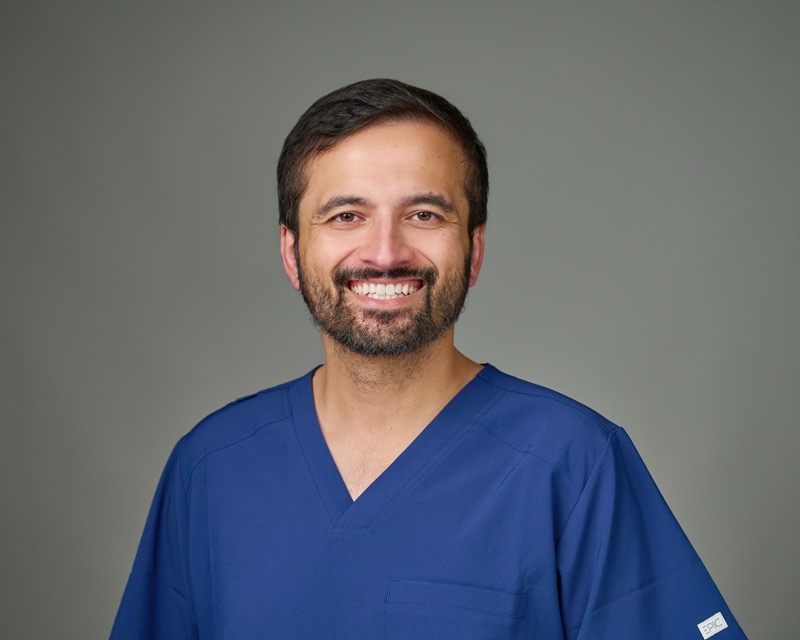
A short note from Dr. Abdullah
I'd rather have a transparent conversation about cost up front than have you discover the real number after you've made an emotional commitment to a protocol. The pricing isn't designed to convince you. It's designed to give you the information to make a sane decision. If, after seeing it, the math doesn't work for you, that's a clean answer. We'd rather lose your business than have you stretch yourself for a procedure you can't comfortably afford.