
- In lab studies, Muse cells resisted DNA damage and senescence better than ordinary mesenchymal stem cells.
- Older donors had fewer Muse cells in a 2017 study, but the cells themselves behaved the same at any age.
- Longevity researchers now name Muse cells as a promising healthspan tool, building on encouraging early human trials.
Can Muse cells help with aging? Here's what the research shows so far: Muse cells are a rare stem cell that shrugs off the kinds of cellular damage that drive aging, repairs its own DNA quickly, and in published studies travels through the bloodstream to injured tissue. That combination is why longevity researchers, including the scientist whose lab discovered them, are now writing about Muse cells as a possible tool for a longer healthspan.
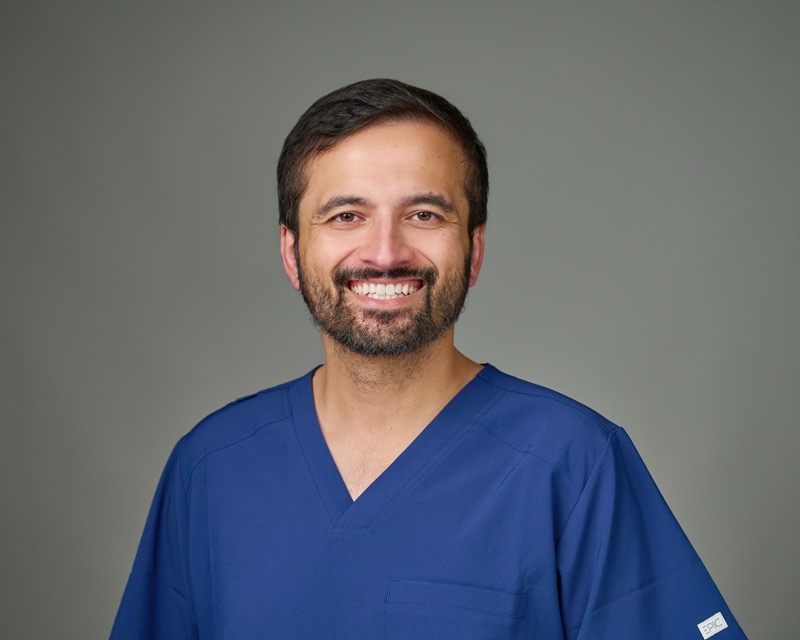
I'm Dr. Farhan Abdullah, Medical Director of Apex Regenerative Institute in Southlake, Texas. Apex is the first clinic in Dallas-Fort Worth to offer Muse cell therapy, and the aging question comes up in nearly every Muse conversation I have. Usually it sounds something like, "Doc, I don't need a new knee. I need a new decade." Fair enough.
So let's talk about what aging looks like at the cellular level, why a stress-enduring cell matters, and what the studies actually found. If you're brand new to Muse cells, my plain-language explainer on what Muse cells are is a good place to start.
What actually happens to stem cells as we age?
As we age, our cells pile up damage: DNA breaks, shorter telomeres, mitochondria that make energy less efficiently. Our repair cells take those hits too, and some stop dividing altogether, a state called senescence. Fewer working repair cells means slower recovery from everyday wear and tear.
A 2025 review in the journal Biogerontology by Dr. Mari Dezawa of Tohoku University, whose lab first described Muse cells in 2010, lays this out well. Aging rests on cellular changes like telomere attrition, DNA damage and mitochondrial dysfunction. That's why she calls stem cell approaches "a rational strategy for solving aging problems at the cellular level."
I like to explain it with a house. You can live happily in a 60-year-old house for decades, as long as somebody keeps fixing the roof. The trouble starts when the repair crew retires and nobody hires a replacement.
Do your own Muse cells decline with age?
The best data we have suggests you have fewer of them as you get older, but the ones you have still work. That second part is the encouraging bit.
In a 2017 study in the Journal of Dermatological Science, Tohoku University researchers measured Muse cells in fat tissue from 11 people of different ages. Older donors yielded fewer mesenchymal stem cells (MSCs) per gram of fat, and a smaller percentage of those cells were Muse cells. But once the Muse cells were isolated, they behaved the same no matter how old the donor was: same pluripotency, same growth curves.
It's one tissue and 11 people, so think of it as an early clue. It does match a broader pattern. A 2025 review in Biogerontology by Rudnitsky and colleagues noted that in humans, the effectiveness of MSCs appears relatively independent of donor age. The quantity drops. The quality seems to hold.
If part of aging is a numbers problem, the logical next question is whether adding healthy repair cells back can help. That's exactly the question the field is now asking out loud.
Why does "stress-enduring" matter for aging?
Because aging is, in large part, accumulated stress. A cell that handles stress well is a cell that keeps working longer, and Muse cells earned the "stress-enduring" in their name.
In 2018, a team in Naples, Italy, published a study in Oncotarget comparing how Muse cells and ordinary MSCs cope with chemical and physical stress that damages DNA. The Muse cells held up better. They showed lower levels of senescence and of apoptosis (programmed cell death) afterward. They sensed the DNA damage quickly and switched on their repair systems properly, and activity in a pathway that fixes double-strand DNA breaks, called non-homologous end joining, went up. In some of the non-Muse cells, by contrast, the damage response was still running 48 hours later, or never switched on at all.
The same group summarized their findings in a 2018 book chapter with a title I'd happily put on a T-shirt: "Muse Stem Cells Are Among the Best Performers."
Translation for the rest of us: Muse cells take a hit, fix it, and get back to work instead of retiring early. That's the exact trait you'd want in a repair cell if your goal is aging well.
How might Muse cells support healthier aging?
The leading idea is repair right where the damage is. In published studies, Muse cells given by IV find injured tissue, clear away damaged cells, and in animal research take on the identity of the cells that need replacing.
Dr. Dezawa's 2025 review walks through the sequence. Injected Muse cells sense sphingosine-1-phosphate (S1P), a universal "damage here" signal, and migrate selectively to damaged tissue instead of getting trapped in the lungs. Once there, they engulf damaged and dying cells and turn into the same cell type, helping restore the tissue's structure. She argues Muse cells are key not only to the medical benefits of MSCs but also to their potential use in anti-aging therapy.
There's an immune angle that matters for older adults, too. A 2024 review in Stem Cells Translational Medicine, covering the Japanese clinical trials, reported that donor Muse cells were given by IV without HLA matching tests or immunosuppressant drugs. Dezawa's review adds that HLA-mismatched donor Muse cells survived in recipient tissue for an extended period. For someone in their 60s or 70s, whose own supply may have thinned, a screened donor source is a practical advantage.
What about MSCs in older adults?
The closest human data on aging itself comes from MSCs, the larger cell family Muse cells live in. In a 2017 phase II randomized, double-blind, placebo-controlled trial in the Journals of Gerontology, 30 adults with aging frailty (average age about 75) received a single IV infusion of donor MSCs or placebo. At the 100-million-cell dose, six-minute walk distance, physical performance scores and lung function improved, and the inflammatory marker TNF-alpha dropped. No therapy-related serious adverse events occurred in the first month.
Rudnitsky's review adds animal data: in aged rodents, MSCs and stem cell-derived vesicles given systemically shifted the molecular profiles of several organs back toward those of younger animals. The authors single out Muse cells as potentially "particularly relevant for promoting healthspan."
What have human Muse cell trials found so far?
The human Muse data comes from small, early-phase trials, mostly in Japan, focused on specific injuries rather than aging. The results are early and encouraging.
The most-cited is a 2023 randomized, placebo-controlled trial in the Journal of Cerebral Blood Flow & Metabolism. Thirty-five people with subacute ischemic stroke received a single IV dose of a donor Muse cell product called CL2020 (25 patients) or placebo (10 patients), with no immunosuppressants. At 12 weeks, 40% of the Muse group had reached functional independence, versus 10% on placebo.
No one has run a Muse trial with aging itself as the endpoint yet. That's the next chapter, and researchers are already proposing to measure it with biological "aging clocks." I'll be reading those papers the day they come out.
I'll say this plainly, once: Muse cell therapy, like other cellular therapies, is investigational and not FDA-approved to treat or prevent any disease. The approval pathway for cellular products is long, and it's still running. What keeps me excited is the biology, which gets more interesting every year.
Who asks about Muse cells and aging, and what does a consultation look like?
Mostly active people in their 50s, 60s and 70s who want to keep doing what they love. They're not shopping for a fountain of youth. They want to play 18 holes on Saturday and still be able to pick up the grandkids on Sunday.
In clinic, the question I hear most is, "Am I too old for this?" The research above is part of why that's a real conversation and not a short one: donor cells sidestep the age of your own supply, and the frailty trial enrolled people averaging 75.
A consultation starts with your history, your labs, imaging if it's relevant, and your goals. We go through what the research shows, where it's headed, and whether Muse cells, MSCs or something simpler fits your situation. You can read more about how Muse cell therapy works at Apex, and our longevity page is where we discuss candidacy. Muse cell therapy is from $15,000 for a single-dose protocol, and whether it fits is decided at consultation.
We also talk about the unglamorous stuff, because it matters. Cells don't work in a vacuum. Sleep, strength training, protein, blood sugar and blood pressure all shape the environment any repair cell lands in, and I'd rather your body be a good host than a tough crowd. If you already do a lot of this well, great. Our job is to look at the whole picture, find the pieces that can still improve, and build a plan you can actually keep doing at 75.
If you've been reading about Muse cells and wondering whether they belong in your plan for the next 20 years, let's talk. Apex is the first clinic in Dallas-Fort Worth to offer Muse cell therapy, and if you're coming in from out of state, we'll help you plan the visit. Start with a quick candidacy check, bring every question you've got, and we'll figure out together what makes sense for you.
Frequently asked questions
Do Muse cells decline with age?
In a 2017 study of fat tissue from 11 people, older donors had a lower percentage of Muse cells. Once isolated, though, Muse cells from older and younger donors grew and behaved the same. The early picture is that numbers fall while function holds.
Are Muse cells used as an anti-aging therapy?
Muse cells are being studied with healthspan in mind, and the researcher whose lab discovered them has written about their potential in anti-aging therapy. The published human work so far is in specific conditions like stroke. Trials focused on aging itself are the logical next step.
How are Muse cells different from regular MSCs for aging?
MSCs mostly work by releasing signals that calm inflammation and support repair. Muse cells, a small subgroup within MSCs, also home to damaged tissue, clear away damaged cells and can become replacement cells. In lab studies they also tolerated DNA damage better.
Can older adults receive donor Muse cells?
In the published Japanese trials, donor Muse cells were given by IV without HLA matching or immune-suppressing drugs. A 2017 MSC trial in frailty enrolled adults averaging about 75. Whether it fits you is something we work out together at consultation.
How long do donor Muse cells stay in the body?
A 2025 review from Tohoku University reports that, in clinical trials, HLA-mismatched donor Muse cells escaped immune rejection and survived in recipient tissue for an extended period without immunosuppressants. That staying power is part of why researchers are interested in them for long-term repair.
Medically reviewed by Farhan Abdullah, DO. This article is for education and isn't medical advice. Regenerative therapies discussed here are investigational and are not FDA-approved to treat, cure, or prevent any disease.
References
- Dezawa M. Comparison of MSCs and Muse cells: the possible use for healthspan optimization. Biogerontology. 2025;26(4):139.
- Yamauchi T, Yamasaki K, Tsuchiyama K, et al. A quantitative analysis of multilineage-differentiating stress-enduring (Muse) cells in human adipose tissue and efficacy of melanocytes induction. J Dermatol Sci. 2017;86(3):198-205.
- Rudnitsky E, Braiman A, Wolfson M, et al. Mesenchymal stem cells and their derivatives as potential longevity-promoting tools. Biogerontology. 2025;26(3):96.
- Alessio N, Squillaro T, Özcan S, et al. Stress and stem cells: adult Muse cells tolerate extensive genotoxic stimuli better than mesenchymal stromal cells. Oncotarget. 2018;9(27):19328-19341.
- Squillaro T, Alessio N, Di Bernardo G, et al. Stem Cells and DNA Repair Capacity: Muse Stem Cells Are Among the Best Performers. Adv Exp Med Biol. 2018;1103:103-113.
- Minatoguchi S, Fujita Y, Niizuma K, et al. Donor Muse Cell Treatment Without HLA-Matching Tests and Immunosuppressant Treatment. Stem Cells Transl Med. 2024;13(6):532-545.
- Tompkins BA, DiFede DL, Khan A, et al. Allogeneic Mesenchymal Stem Cells Ameliorate Aging Frailty: A Phase II Randomized, Double-Blind, Placebo-Controlled Clinical Trial. J Gerontol A Biol Sci Med Sci. 2017;72(11):1513-1522.
- Niizuma K, Osawa SI, Endo H, et al. Randomized placebo-controlled trial of CL2020, an allogenic muse cell-based product, in subacute ischemic stroke. J Cereb Blood Flow Metab. 2023;43(12):2029-2039.