Softwave Shockwave Therapy
Unfocused electrohydraulic shockwaves that recruit endogenous mesenchymal stem cells, drive growth-factor expression, and prime tissue for the regenerative response. Used standalone for tendinopathy and as preparation for cellular protocols.
- Class
- Acoustic
- Penetration
- 4–5 in.
- Coverage
- Medicare A&B + supplement
- Role
- Standalone · adjunct
01 About
What it is.
Softwave is an unfocused, electrohydraulic extracorporeal shockwave therapy device — a category of acoustic medicine distinct from focused-shockwave (which has a single deep target point) and radial pressure waves (which are surface-only). Unfocused shockwaves spread their acoustic energy across a treatment volume up to 4–5 inches deep, allowing broad tissue priming without a single point of high-energy concentration.
Mechanism is mechanotransduction: the acoustic wave is sensed by tissue at the cellular level, recruiting endogenous mesenchymal stem cells from the local environment and triggering a controlled growth-factor cascade. The protocol is non-invasive, performed without anesthesia, and tolerated well — most patients describe a deep but manageable thumping sensation during treatment.
02 How it works
How Softwave works.
Acoustic mechanotransduction activates VEGF, eNOS, BMP-2, and other growth factors at the treatment site, drives angiogenesis (new blood vessel formation), and recruits local mesenchymal stem cells from the surrounding tissue. The published basic-science literature shows up-regulation of regenerative signaling cascades within 24–72 hours of a single session.
At Apex, Softwave is used in two ways: as a standalone treatment for tendinopathy, plantar fasciitis, calcific tendinitis, and select chronic MSK conditions; and as tissue priming in the days or weeks before a stem cell or exosome protocol — preparing the local environment so the cellular response has more to work with.
03 What the research shows
What the studies show.
Extracorporeal shockwave therapy has decades of randomized trial data across orthopedic, urologic, and wound-healing indications — with the strongest signal in tendinopathy and chronic plantar fasciitis.
-
Comparative effectiveness of treatments for chronic shoulder calcific tendinitis
A network meta-analysis of 26 randomized trials covering rotator-cuff calcific tendinopathy. Extracorporeal shockwave therapy ranked among the most effective interventions — superior to corticosteroid injection at 3 and 6 months, with sustained benefit at 12 months.
Read on PubMed -
Extracorporeal shockwave therapy for plantar fasciitis
Pooled randomized trial data demonstrated significantly greater pain reduction at 1, 3, and 12 months for patients receiving ESWT compared to placebo or sham, with a favorable adverse-event profile.
Read on PubMed -
Low-intensity shockwave therapy for erectile dysfunction
Pooled data from randomized trials of low-intensity ESWT in vasculogenic erectile dysfunction showed clinically meaningful improvement in IIEF scores and erectile function vs. sham, sustained for at least 6 months post-treatment.
Read on PubMed
Shockwave is most predictably effective in chronic tendinopathy and superficial-to-mid-depth soft tissue. It is an adjunct, not a cure — and we use it where the published response justifies the time and cost.
04 Are you a candidate
Who's a candidate. Who isn't.
Candidates:
- Chronic plantar fasciitis that has not resolved with 6+ weeks of conservative care.
- Calcific or non-calcific rotator cuff tendinopathy.
- Lateral and medial epicondylitis, patellar tendinopathy, Achilles tendinopathy.
- Patients about to undergo a stem cell or exosome protocol who would benefit from tissue priming.
- Patients with vasculogenic erectile dysfunction (Li-ESWT protocol — discussed individually).
When we will not recommend it:
- Pregnancy.
- Coagulopathy or anticoagulation that cannot be paused safely.
- Active malignancy at the treatment site.
- Pacemakers or implanted neurostimulators within the treatment field.
- Local skin infection or open wound.
Think you might be a candidate?
The first step is a 60–90 minute consultation. We review your imaging, history, and goals — and tell you honestly whether this is the right next step.
05 A patient experience
Dr. Abdullah was so upfront about stem cells and what I needed and didn't need. My tennis elbow finally got better!
Huda Khan Google · 5.0
07What happens at your consultation
A conversation, not a sales meeting.
-
01
Intake & history
60–90 minutes. We review imaging, prior treatments, current medications, and goals. Most of this hour is listening.
-
02
Focused exam
A clinical exam tailored to your indication. Range of motion, strength, functional testing — what the literature actually predicts response on.
-
03
Honest candidacy review
If we think you're a candidate, we'll tell you why. If we don't, we'll tell you what we'd recommend instead — surgery, PT, watchful waiting.
-
04
Written plan & pricing
A defined treatment plan with modality, sequence, follow-up cadence, and total cost — before any commitment.
06 What treatment looks like
What treatment looks like.
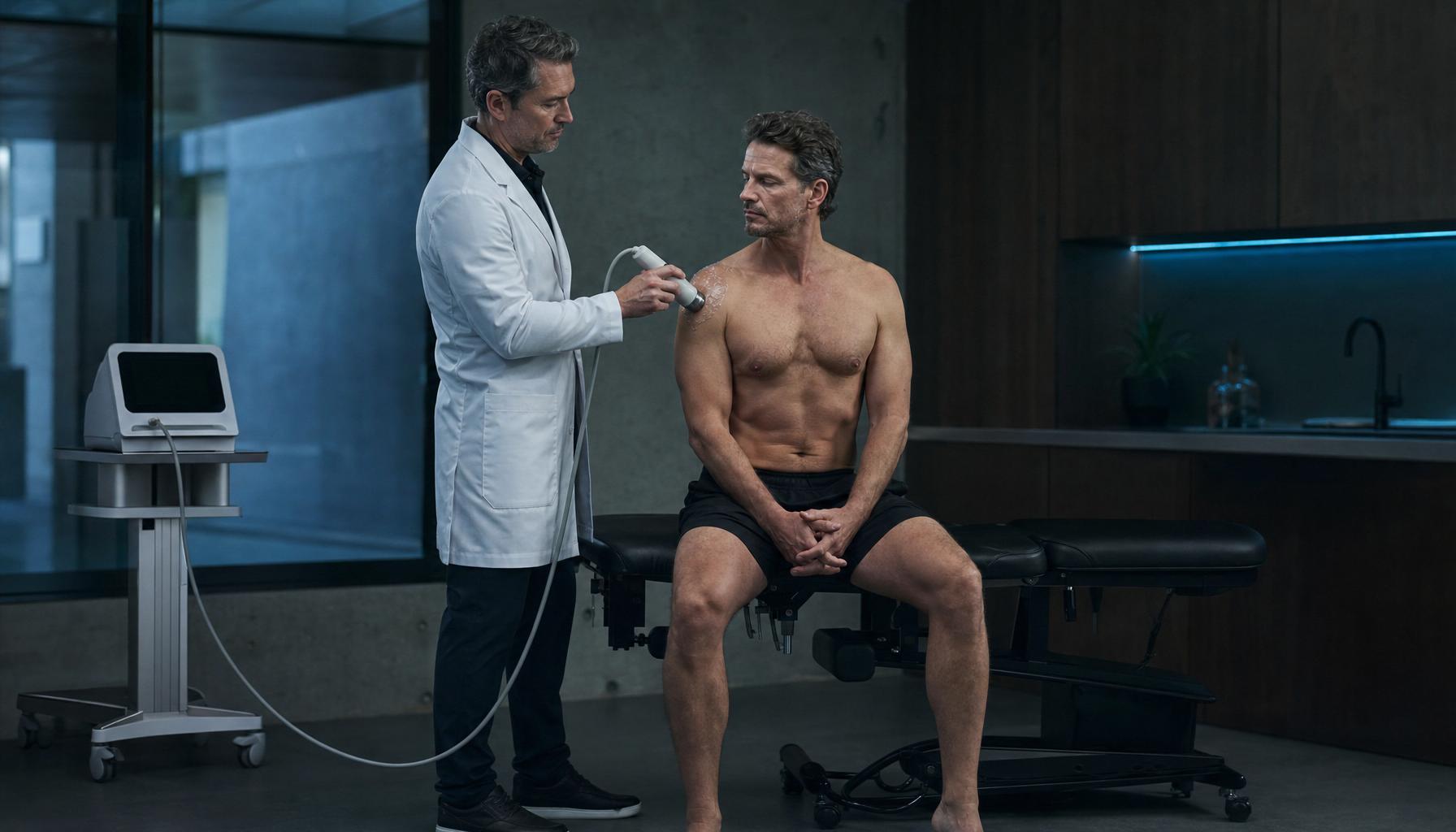
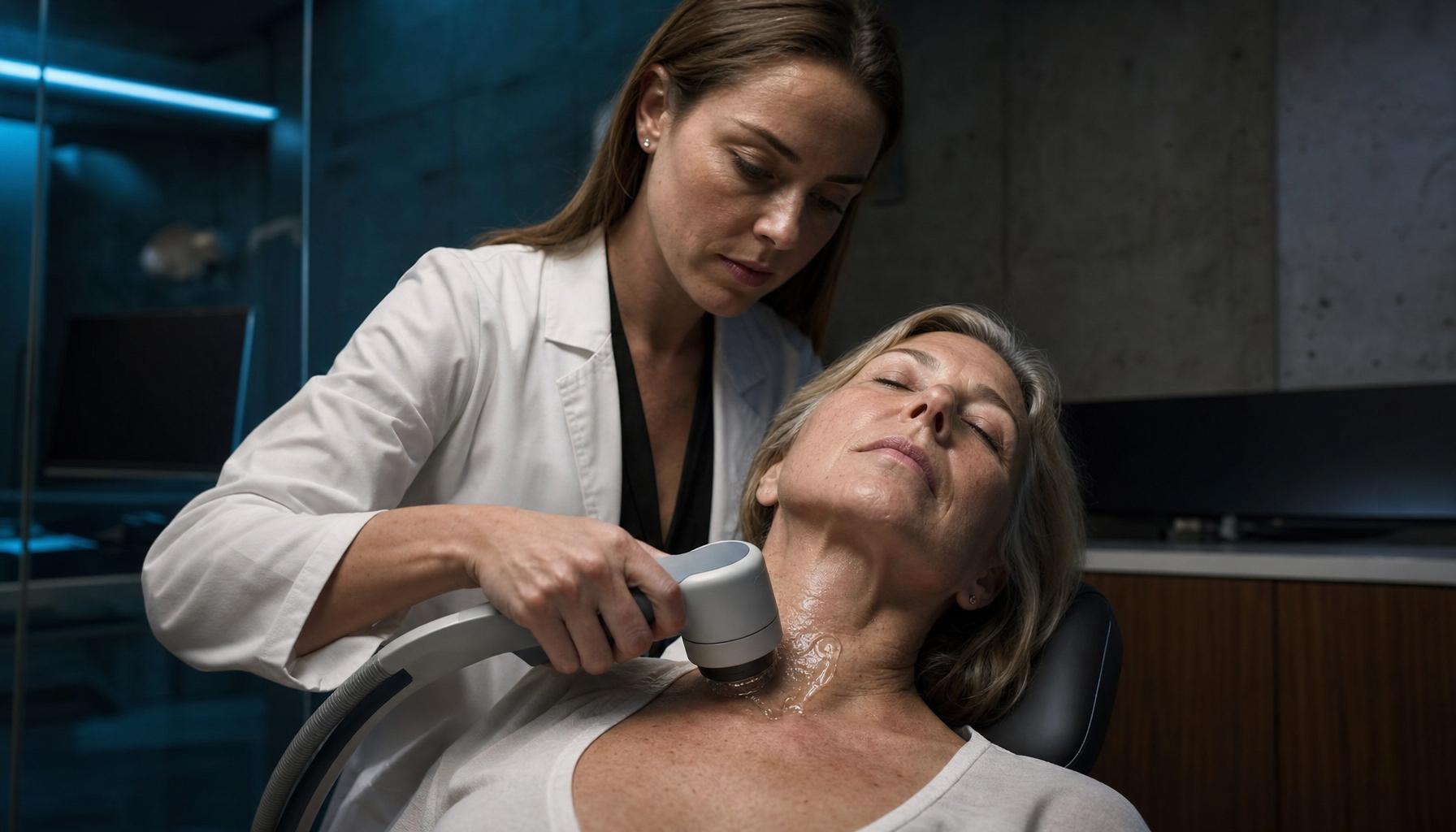
A typical Softwave session runs 15–25 minutes. The applicator is moved across the treatment area while gel transmits the acoustic wave; there is no anesthesia and most patients describe a deep, tolerable thumping. There is no recovery time — patients return to normal activity immediately.
Most indications respond best to a series of 4–6 sessions, spaced one week apart. Reassessment at 6 weeks. For Medicare-covered patients we verify benefits before the first visit; the protocol is covered by Medicare Parts A and B with supplement (not by Medicare Advantage plans).

09 Common questions
Softwave Shockwave Therapy, answered.
Is Softwave the same as TENS or ultrasound therapy?
No. TENS is electrical stimulation. Therapeutic ultrasound delivers thermal energy. Softwave is unfocused acoustic shockwave — a fundamentally different mechanism that triggers mechanotransduction, growth-factor release, and stem-cell recruitment at the cellular level.
Does it hurt?
Most patients describe a deep, tolerable thumping or pressure sensation. There is no anesthesia required. Discomfort is typically lower than focused shockwave devices because the unfocused acoustic energy is spread across the treatment area rather than concentrated at a single point.
How many sessions will I need?
4–6 sessions, one week apart is the standard protocol for tendinopathy and plantar fasciitis. Reassessment at 6 weeks. Some indications (calcific tendinitis, chronic Achilles) may warrant additional sessions based on response.
Why is shockwave done before stem cell therapy?
Shockwave primes the tissue — recruiting endogenous mesenchymal stem cells, driving angiogenesis, and creating a more receptive local environment for the cellular protocol that follows. Used as an adjunct, it amplifies the response we get from the regenerative therapy itself.
Is it covered by insurance?
Softwave is covered by Medicare Parts A and B with a supplemental plan. It is not covered by Medicare Advantage plans, and coverage by commercial insurance varies. We verify benefits before scheduling so there are no surprises.
Can I use it during pregnancy?
No. Shockwave therapy is contraindicated in pregnancy. We will reschedule if you become pregnant during a treatment series.
10 Coverage & cost
Softwave is covered by Medicare Parts A and B with a supplemental plan. We verify coverage before scheduling. For patients on Medicare Advantage or commercial insurance we discuss out-of-pocket cost in writing before any commitment. Financing options are available where coverage doesn't apply.
Begin with a consultation.
A 60–90 minute first visit. We confirm whether shockwave is the right tool for your indication, verify your coverage, and walk through the protocol — before any commitment.