Red Light Therapy (LED)
Low-power LED red and near-infrared light for surface-to-mid-tissue photobiomodulation — mitochondrial function, dermal regeneration, and post-treatment recovery. An adjunct to recovery, not a standalone cure.
- Class
- Photonic
- Wavelength
- 660 + 850 nm
- Source
- Medical-grade LED
- Role
- Recovery adjunct
01 About
What it is.
Red light therapy — also called photobiomodulation (PBM) or low-level laser therapy in its medical literature — is the application of red (around 660 nm) and near-infrared (around 850 nm) light to tissue. The wavelengths are selected because they pass through skin and are absorbed by cytochrome c oxidase in mitochondria, transiently increasing ATP production and modulating reactive oxygen species.
At Apex, red light therapy is an adjunct to recovery, not a standalone cure. We use it where the published mechanism aligns with what the patient needs: dermal recovery, post-treatment tissue support, mitochondrial maintenance, and selective musculoskeletal pain. We do not run it as a panacea, and we do not sell home-device packages.
02 How it works
How photobiomodulation works.
Red and near-infrared photons are absorbed by cytochrome c oxidase (Complex IV) in the mitochondrial electron transport chain. The result is a transient increase in ATP production, a modulation of reactive oxygen species, and a downstream signaling cascade that can support cellular repair, reduce local inflammation, and improve tissue function.
LED-based PBM differs from Class IV laser primarily in energy density and depth of penetration: LED is gentler, broader, and surface-to-mid-tissue. It is the right tool for skin, superficial soft tissue, and post-treatment maintenance. Class IV laser is reserved for deeper indications — discussed on its own page.
03 What the research shows
What the studies show.
Photobiomodulation has decades of basic-science and clinical literature. The strongest randomized signals are in dermal/wound applications and in adjunctive musculoskeletal recovery — fields where the cellular mechanism aligns with measurable outcomes.
-
A controlled trial to determine the efficacy of red and near-infrared LED on improving skin complexion and wrinkles
A randomized trial in 113 participants demonstrated significantly improved skin complexion, smoothness, and intradermal collagen density after a 30-treatment course of LED PBM versus untreated controls — a positive signal for dermal photobiomodulation.
Read on PubMed -
Photobiomodulation for skeletal muscle recovery and performance: meta-analysis
Pooled data from 39 randomized trials showed PBM applied before or after exercise produced significant reductions in delayed-onset muscle soreness, creatine kinase elevation, and recovery time. The strongest published signal in the recovery-adjunct literature.
Read on PubMed -
Effect of low-level laser therapy on hair growth: a systematic review
A pooled analysis of randomized and controlled trials demonstrated significant improvements in hair density and growth velocity in androgenetic alopecia after low-level light therapy — the basis for FDA clearance of several home-use devices.
Read on PubMed
Red light therapy is most predictably useful as an adjunct to recovery — paired with exercise rehabilitation, post-injection care, or dermal protocols. Standalone claims of broad systemic benefit outrun the published data. We use it where the mechanism justifies it, and not as a cure for everything.
04 Are you a candidate
Who's a candidate. Who isn't.
Candidates:
- Patients in active recovery from a regenerative protocol — supporting tissue response and reducing post-injection soreness.
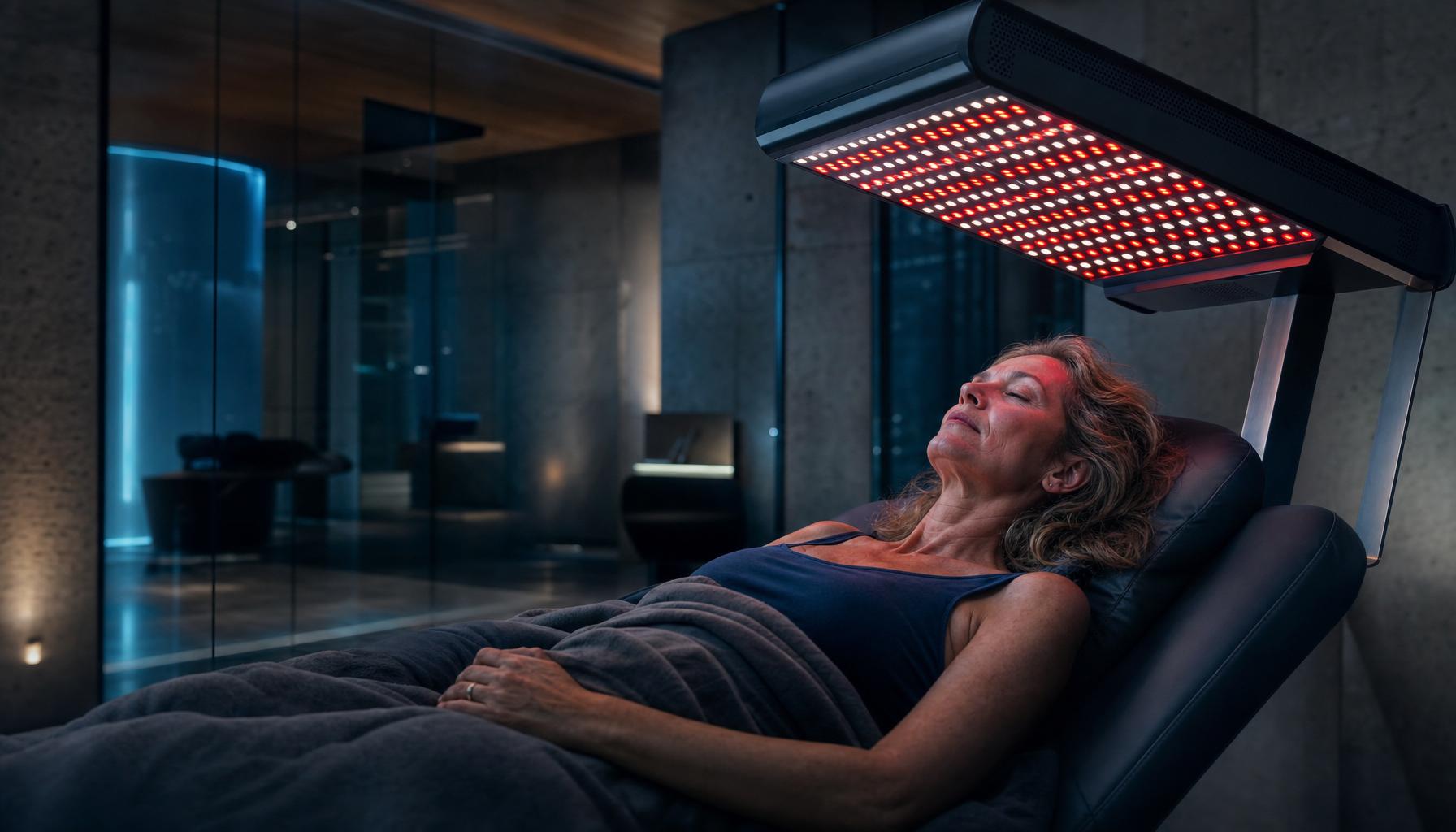
- Skin and dermal indications: photoaging, fine lines, post-procedure recovery, scar remodeling.
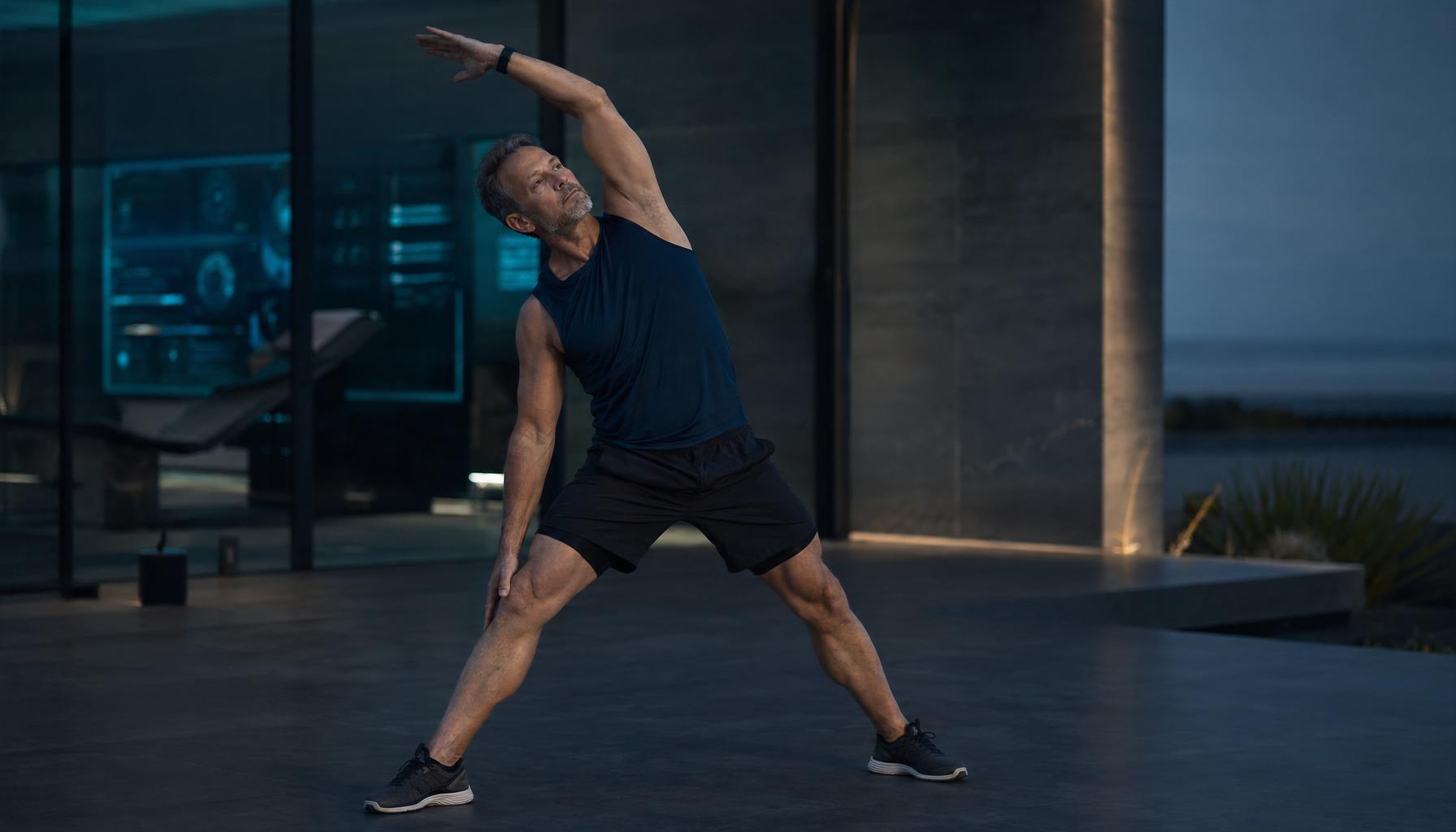
- Athletes and active patients seeking measurable recovery support around training load.
- Patients with mild musculoskeletal pain (knee, shoulder, low back) seeking a non-pharmacologic adjunct.
- Patients with androgenetic alopecia exploring low-level light therapy.
When we will not recommend it:
- Active malignancy at the treatment site — we will not deliver photobiomodulation over a known or suspected tumor.
- Photosensitizing medications (certain antibiotics, retinoids, immunosuppressants) — reviewed individually.
- Severe photosensitivity disorders.
- Patients seeking it as a standalone treatment for serious systemic disease — we are honest about what PBM is and isn't.
Think you might be a candidate?
The first step is a 60–90 minute consultation. We review your imaging, history, and goals — and tell you honestly whether this is the right next step.
07What happens at your consultation
A conversation, not a sales meeting.
-
01
Intake & history
60–90 minutes. We review imaging, prior treatments, current medications, and goals. Most of this hour is listening.
-
02
Focused exam
A clinical exam tailored to your indication. Range of motion, strength, functional testing — what the literature actually predicts response on.
-
03
Honest candidacy review
If we think you're a candidate, we'll tell you why. If we don't, we'll tell you what we'd recommend instead — surgery, PT, watchful waiting.
-
04
Written plan & pricing
A defined treatment plan with modality, sequence, follow-up cadence, and total cost — before any commitment.
06 What treatment looks like
What treatment looks like.
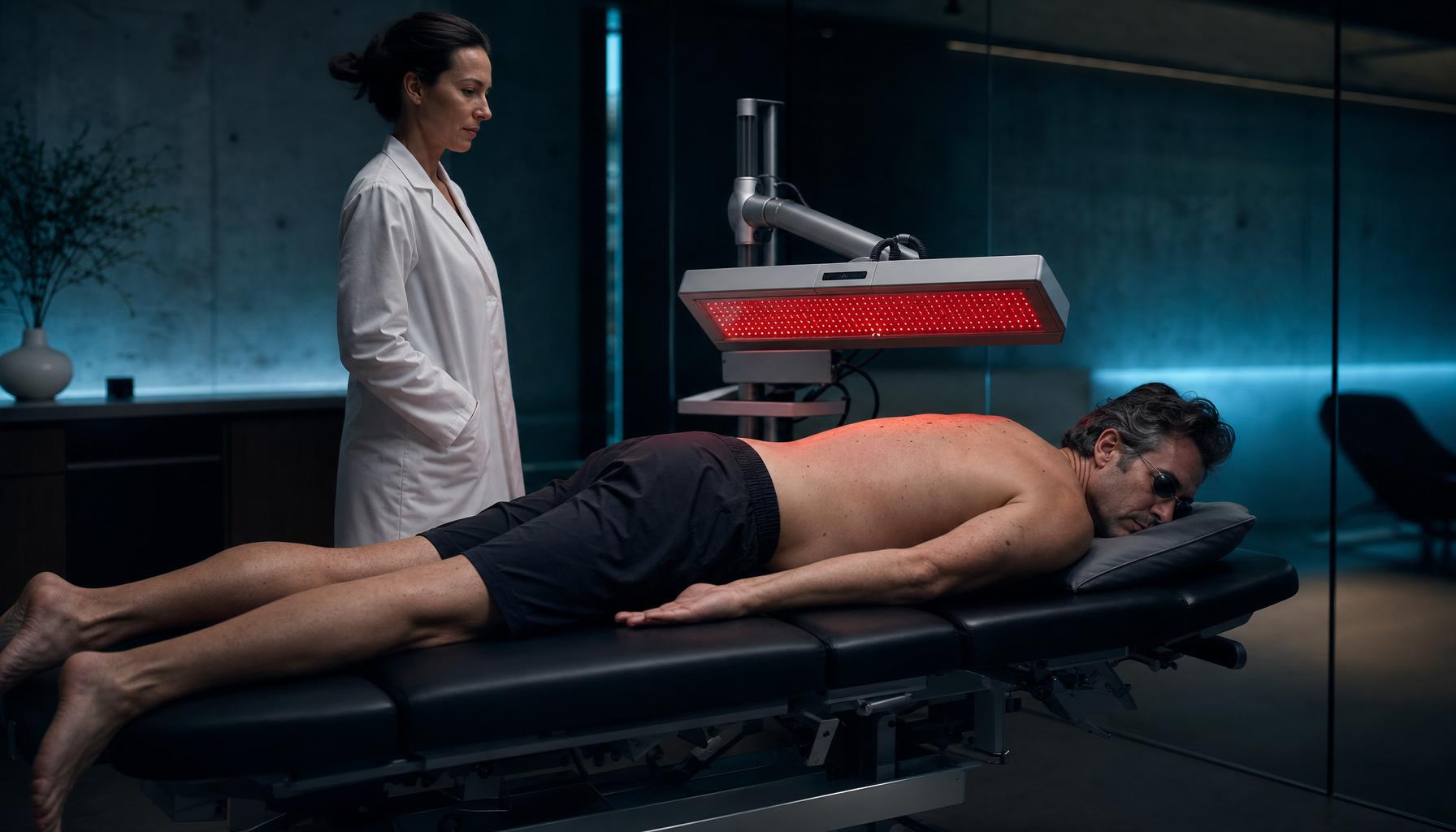
A typical session is 10–20 minutes of supervised LED exposure to the target area. There is no recovery time, no anesthesia, and no acute side effects in the published literature when medical-grade devices and standard exposure parameters are used.
Frequency depends on indication. Recovery and dermal protocols typically run 2–3 sessions per week for 4–8 weeks, with reassessment at 6 weeks. We define the schedule in writing before any commitment.
09 Common questions
Red Light Therapy (LED), answered.
Will the light burn or tan my skin?
No. Red and near-infrared LED do not emit ultraviolet light. There is no tanning effect, no sunburn risk, and no DNA damage at the wavelengths used. Eye protection is provided as a precaution against direct gaze.
How is this different from Class IV laser?
LED red light is broader, gentler, and shallower. It supports surface-to-mid-tissue indications. Class IV laser is a higher-energy, deeper-penetration tool for musculoskeletal pain. Both share the photobiomodulation mechanism, but at different doses and depths.
How many sessions will I need?
Most protocols run 2–3 sessions per week for 4–8 weeks, with reassessment at 6 weeks. Some patients continue with a maintenance schedule; many do not. We do not sell open-ended packages.
Can I do this at home with my own device?
Some — for skin and recovery applications. Home devices vary widely in actual delivered dose; clinical-grade equipment delivers a calibrated, documented exposure. We are happy to advise on home-device selection for patients pursuing maintenance, without selling you anything.
After stem cells, can I do red light?
Yes — and we often recommend it. PBM is well-suited as a post-injection recovery adjunct, supporting the local tissue response and reducing post-procedure soreness. We coordinate timing with your specific protocol.
Is it covered by insurance?
Generally not covered for elective recovery and dermal indications. Pricing is discussed in writing before any commitment. We provide receipts for HSA/FSA reimbursement where applicable.
10 Coverage & cost
Red light therapy is generally not covered by insurance for elective recovery, dermal, or wellness indications. Pricing is discussed in writing before any commitment — no subscriptions, no recurring auto-charges. We provide receipts for HSA/FSA reimbursement where applicable.
Begin with a consultation.
A 60–90 minute first visit. We confirm whether photobiomodulation is the right adjunct for your indication, define the protocol, and walk through expected outcomes — before any commitment.