Tendinopathy
Tennis elbow, golfer's elbow, achilles tendinopathy, plantar fasciitis, patellar tendinopathy. The tendon injuries that don't heal on their own — and which respond particularly well to combined regenerative and acoustic protocols.
- Class
- Tendon · soft tissue
- Approach
- Targeted injection
- Materials
- PRP · exosome · MSC
- Adjunct
- Softwave shockwave
01 About
What tendinopathy is.
Tendinopathy is degenerative change in tendon tissue — collagen disorganization, neovascularization, and chronic micro-tearing — usually from repetitive load. It is not the same as tendinitis (acute inflammation): once a tendon has progressed to tendinosis, the body's ordinary inflammatory response is no longer driving repair.
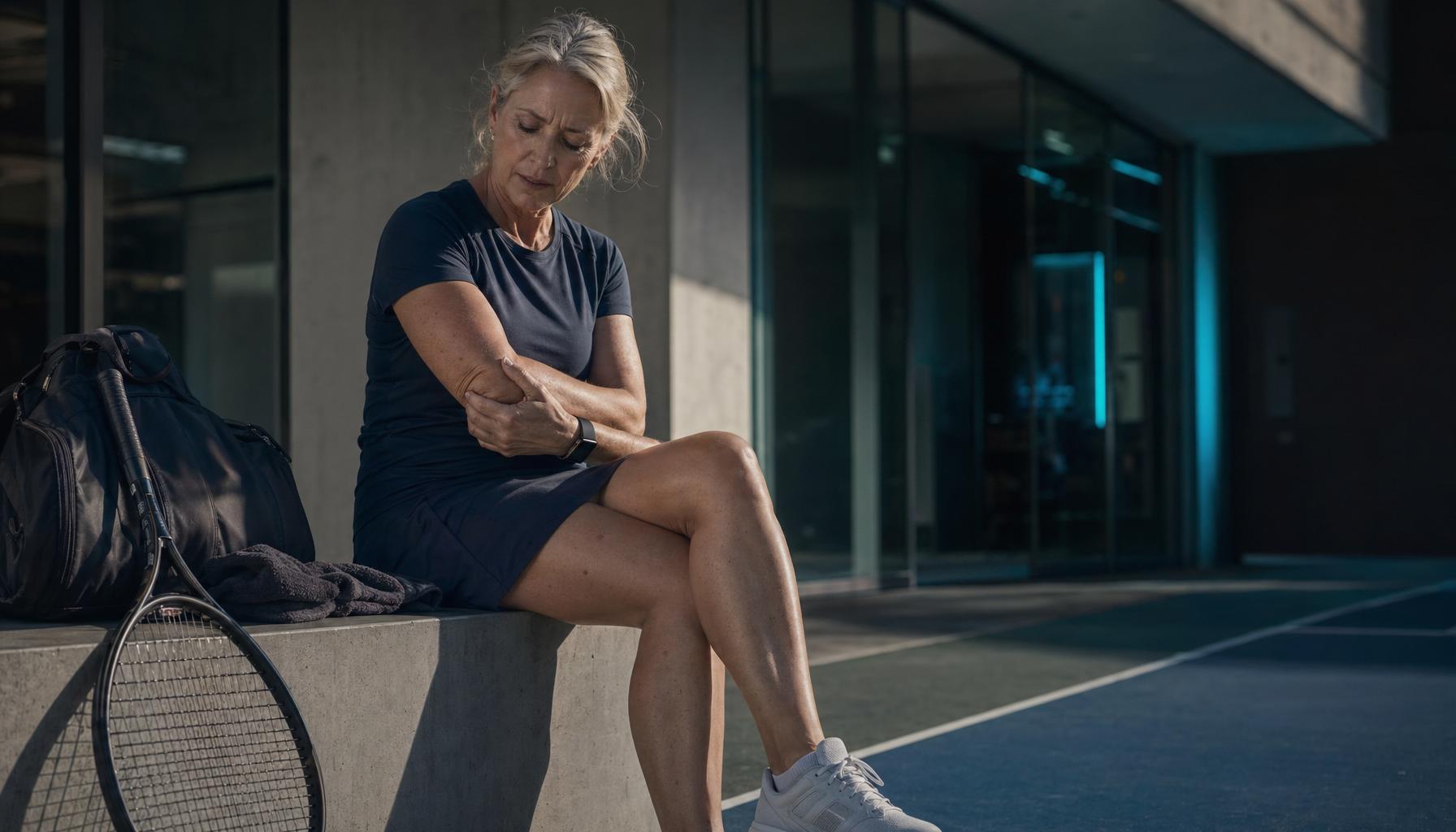
The classic candidates are tennis elbow (lateral epicondyle), golfer's elbow (medial epicondyle), achilles tendinopathy, plantar fasciitis, and patellar tendinopathy ("jumper's knee"). All present the same way: persistent localized pain, worse with load, that hasn't responded to rest, eccentric loading, or anti-inflammatories.
02 How it works
Why regen works for tendons.
Tendinosis is fundamentally a problem of stalled healing. The tendon is stuck in a low-grade degenerative state with no active repair signal. Regenerative biologics — PRP, exosomes, and MSCs — re-introduce the growth factors and cellular signaling the tendon needs to actually heal rather than simply stay irritated.
Tendinopathy responds especially well to combined regenerative and acoustic protocols. Softwave shockwave delivers mechanical energy that recruits endogenous stem cells and primes the tissue; the biologic injection then adds the cellular signaling. Many of the strongest patient outcomes at Apex come from this combination.
03 What the research shows
What the studies show.
Tendinopathy has one of the larger evidence bases in regenerative medicine — particularly for PRP. Stem cell and exosome data are growing. The most consistent benefit shows up at the 6-month and longer follow-up window.
-
Efficacy of PRP for Chronic Tennis Elbow: Double-Blind Multicenter Trial of 230 Patients
In the largest tennis-elbow PRP trial to date, 230 patients were randomized at 12 centers to leukocyte-enriched PRP or active control. At 24 weeks, the PRP group had clinically meaningful pain and function improvements over controls — establishing PRP as a credible second-line option for chronic lateral epicondylitis.
Read on PubMed -
PRP vs. Corticosteroid for Lateral Epicondylitis at 1-Year Follow-Up
100 patients with chronic tennis elbow were randomized to PRP or corticosteroid injection. At one year, 73% of PRP patients met success criteria on pain (VAS) and function (DASH), versus 49–51% of corticosteroid patients — a clinically meaningful long-term advantage.
Read on PubMed -
PRP vs. Corticosteroid for Plantar Fasciitis
A randomized trial of PRP versus corticosteroid in plantar fasciitis showed significant improvement in pain severity and physical function in the PRP group, with healing effects sustained through 3+ months — corticosteroid effects, by contrast, often regressed at the same window.
Read on PubMed
Evidence is strongest at 6+ months — corticosteroids often outperform regen at 6 weeks, but the picture flips by 6 months. We will tell you to expect a slower, more durable response.
04 Are you a candidate
Who's a candidate.
Candidates:
- Chronic tennis elbow or golfer's elbow that hasn't responded to PT and bracing.
- Achilles tendinopathy or plantar fasciitis with persistent pain on load.
- Patellar tendinopathy in athletes returning to sport.
- Tendon injuries that have plateaued after 3+ months of conservative treatment.
When we will not recommend it:
- Acute tendon ruptures requiring surgical repair.
- Tendons that have not had a course of structured eccentric loading first.
- Patients on anticoagulants or with active local infection.
- Patients who haven't had imaging to confirm the pain generator.
Think you might be a candidate?
The first step is a 60–90 minute consultation. We review your imaging, history, and goals — and tell you honestly whether regenerative therapy is the right next step.
05 A patient experience
Dr. Abdullah was so upfront about stem cells and what I needed and didn't need. My tennis elbow finally got better!
Huda Khan Google · 5.0
07What happens at your consultation
A conversation, not a sales meeting.
-
01
Intake & history
60–90 minutes. We review imaging, prior treatments, current medications, and goals. Most of this hour is listening.
-
02
Focused exam
A clinical exam tailored to your indication. Range of motion, strength, functional testing — what the literature actually predicts response on.
-
03
Honest candidacy review
If we think you're a candidate, we'll tell you why. If we don't, we'll tell you what we'd recommend instead — surgery, PT, watchful waiting.
-
04
Written plan & pricing
A defined treatment plan with modality, sequence, follow-up cadence, and total cost — before any commitment.
06 What treatment looks like
What treatment looks like.
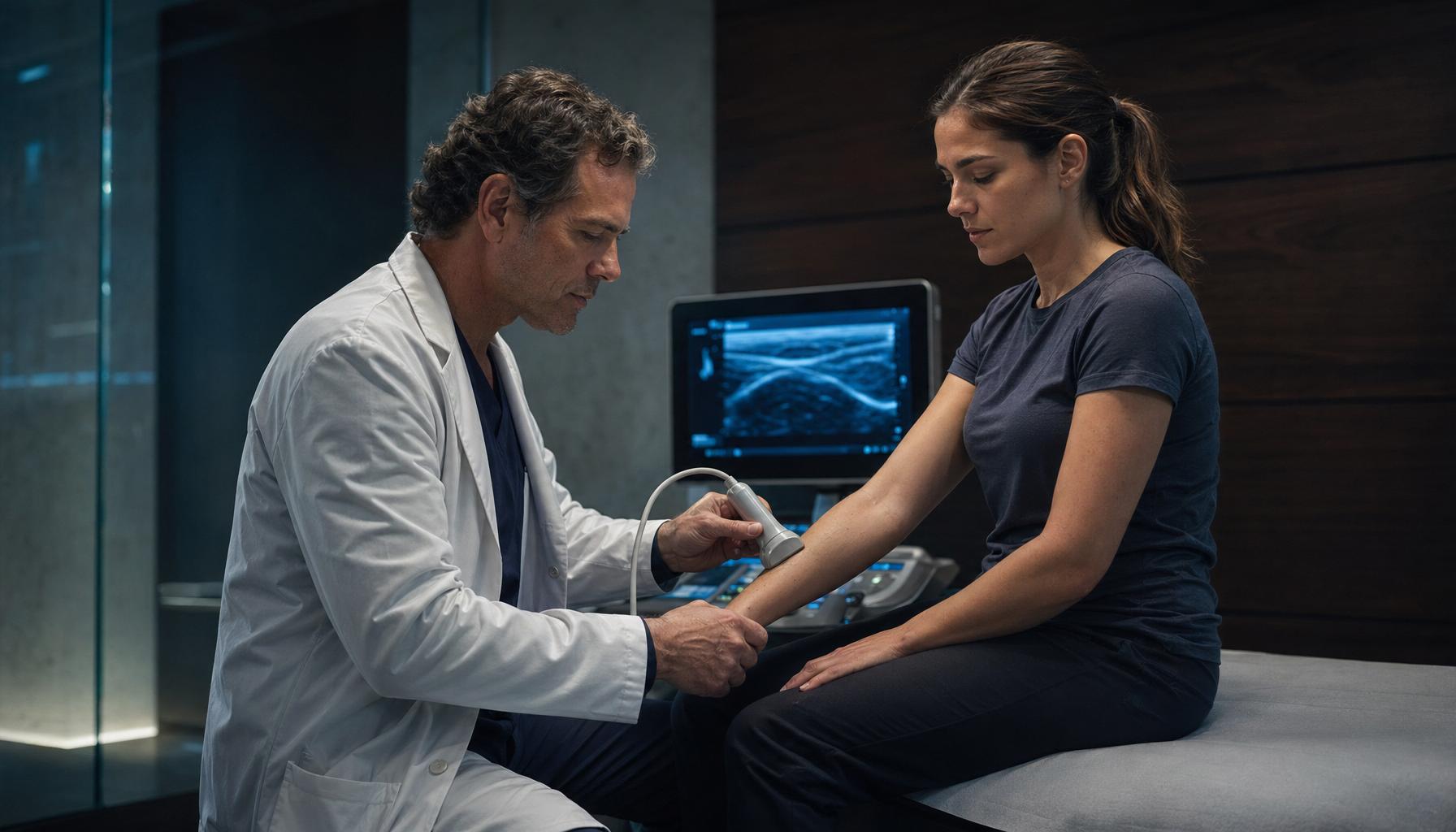
A typical tendon protocol is a combination: image-guided PRP or exosome injection into the affected tendon, paired with a Softwave shockwave course over 4–6 weeks. We use ultrasound for every injection — tendons are too small a target to inject blind.
Reassessment at 6 weeks, 3 months, and 6 months. Functional testing (load tolerance, return-to-sport metrics) and (if indicated) repeat imaging. Tendon healing is slower than joint healing — most patients see steady improvement through the 6-month window.

09 Common questions
Common questions, answered.
How is this different from PRP I had elsewhere?
Protocol details matter a lot. We use ultrasound guidance, often combine with Softwave shockwave, and follow specific dosing schedules backed by the strongest published trials.
Can I keep training during treatment?
Generally yes for non-loading work. We'll guide specific training restrictions based on the tendon and severity.
How many sessions for tennis elbow?
Most respond to 1–2 PRP or exosome injections paired with a 4–6 week shockwave course.
Why does it take months to see results?
Tendons heal slowly. The biologic signals take weeks to months to translate into visible function. Steady improvement through 6 months is the expected pattern.
Is this better than corticosteroid for tennis elbow?
Yes at long-term follow-up. Corticosteroid often outperforms regen at 6 weeks, but the picture flips by 6–12 months.
What are the risks?
Brief post-injection soreness is most common. Serious adverse events are rare across the published tennis-elbow RCT data.
08 Coverage & cost
Most regenerative protocols at Apex are not covered by insurance — we discuss pricing directly, in writing, before any commitment. Softwave shockwave is the exception: covered by Medicare Parts A & B with supplement (not by Medicare Advantage). Financing options are available for protocols not covered. We never hold a pricing conversation until we know you're a candidate.
Begin with a consultation.
A conversation about your tendon injury, what you've already tried, and whether regenerative therapy is the right next step.