Sports & post-surgical recovery
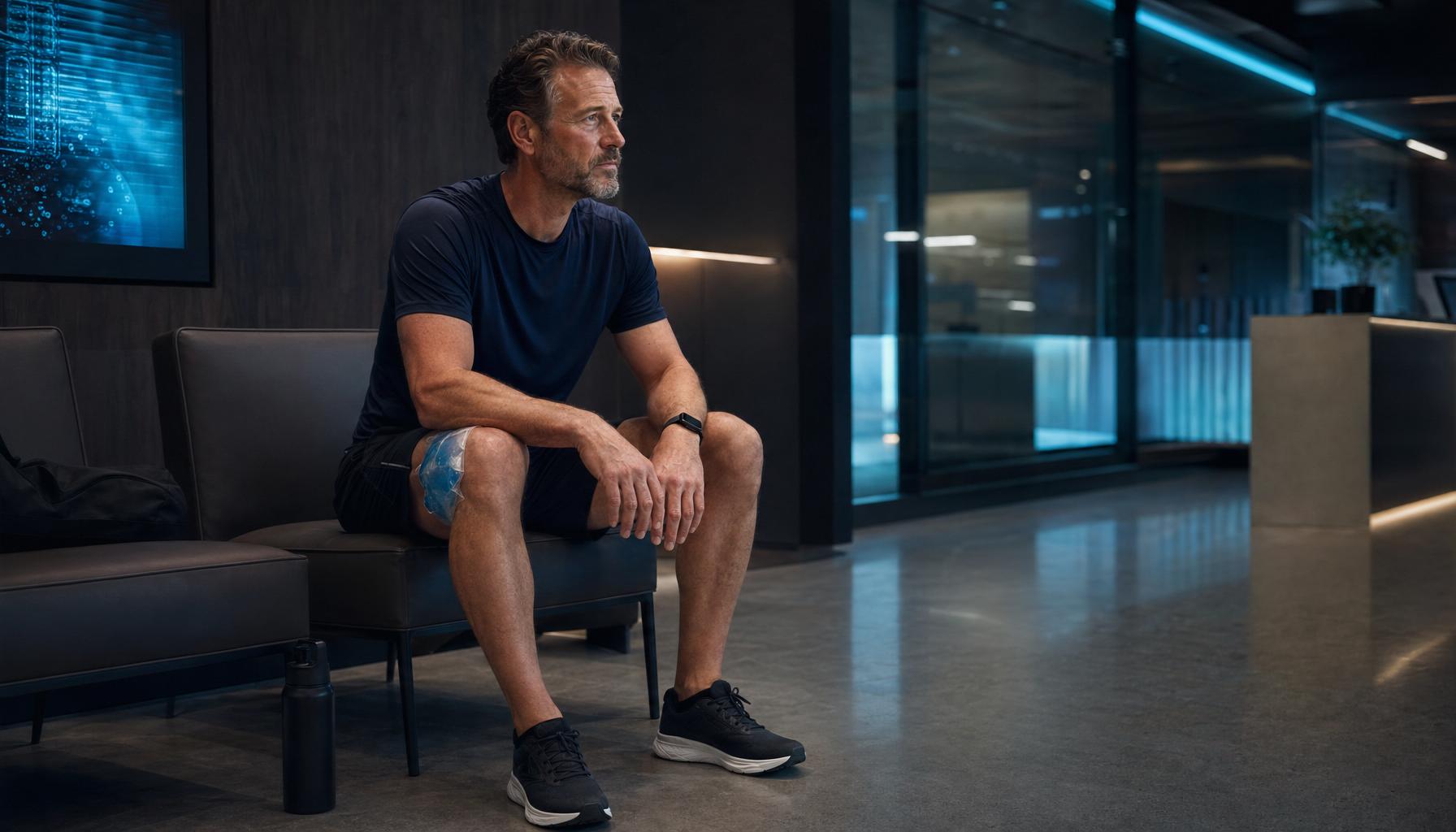
ACL and MCL ligament injuries, accelerated post-surgical healing, and return-to-sport protocols. The use case where regen sits naturally alongside orthopedic care — augmenting rather than replacing surgical work when surgery is the right answer.
- Class
- Sports · post-surgical
- Approach
- Adjunct to surgery / PT
- Materials
- MSC · exosome · PRP
- Coordination
- With orthopedic surgeon
01 About
What sports recovery actually means.
"Sports recovery" covers a wide range — partial ligament tears (ACL, MCL, lateral collateral), meniscal injury, hamstring strains, post-arthroscopy joints, and post-reconstruction grafts that need to mature. Each has different anatomy and different repair biology.
The conventional pathway depends on the injury: PT and bracing for partial tears; arthroscopy or reconstruction for complete tears; structured rehabilitation for graft maturation. Regenerative protocols sit best as augmentation — accelerating the healing of partial tears, supporting graft ligamentization after ACL reconstruction, and reducing post-surgical inflammation.
02 How it works
How regen supports recovery.
For partial ligament and meniscal injuries, regenerative biologics deliver growth factors and cellular signaling that the injured tissue needs to heal — particularly in tissues with poor native blood supply (the inner meniscus, the body of ligaments). At Apex, we use allogeneic mesenchymal stem cells, exosome material, and PRP — not autologous bone-marrow or fat-derived material.
For post-surgical augmentation — particularly ACL reconstruction — biologic injection at the time of surgery or shortly after has been shown to enhance graft maturation on MRI. Whether that translates into superior long-term function is still an open question. We are honest about that.
03 What the research shows
What the studies show.
Sports and post-surgical regenerative medicine has substantial preclinical evidence and growing clinical data. The strongest signal is for biologic augmentation of ACL reconstruction. Results in non-surgical partial-tear management are encouraging but heterogeneous.
Allogeneic Mesenchymal Precursor Cells for ACL Reconstruction (Wang et al.)
A double-blinded randomized trial of a single intra-articular injection of 75 million allogeneic mesenchymal precursor cells (MPCs) in patients undergoing ACL reconstruction. The MPC group had significantly higher KOOS and SF-36 pain scores through 24 months — and reduced lateral tibiofemoral joint space narrowing on imaging compared with controls.
Read on PubMed CentralBiologic Augmentation in ACL Reconstruction: PRP and BMAC
A 2025 review of biologic augmentation for ACL reconstruction. PRP provides early anti-inflammatory and pro-angiogenic signaling; BMAC delivers concentrated MSCs and growth factors to the tendon-bone interface. Both consistently enhance MRI-defined graft maturation — though long-term functional superiority remains inconclusive.
Read on MDPIEfficacy of Stem Cell Therapy for Tendon Graft Ligamentization After ACL Reconstruction
A systematic review of stem cell therapy for tendon graft ligamentization after ACL reconstruction. MSC augmentation enhanced biomechanical and histological properties of the tendon graft in animal models, with promising but limited human data — pointing to clear therapeutic mechanism with continued need for larger RCTs.
Read on PubMed
For partial tears, we will recommend regen first when surgery is not indicated. For complete ruptures, we coordinate with the orthopedic surgeon — surgery first, biologic augmentation second.
04 Are you a candidate
Who's a candidate.
Candidates:
- Partial ligament tears (MCL, partial ACL, LCL) seeking to avoid surgery.
- Post-ACL-reconstruction patients seeking biologic augmentation.
- Athletes recovering from meniscal injury or post-arthroscopy.
- Active adults pursuing accelerated return-to-sport timelines.
When we will not recommend it:
- Complete ligament rupture requiring surgical reconstruction — surgery first, regen second.
- Patients without a clear orthopedic diagnosis.
- Patients seeking to "skip" appropriate surgical care.
- Active joint infection or untreated coagulopathy.
Think you might be a candidate?
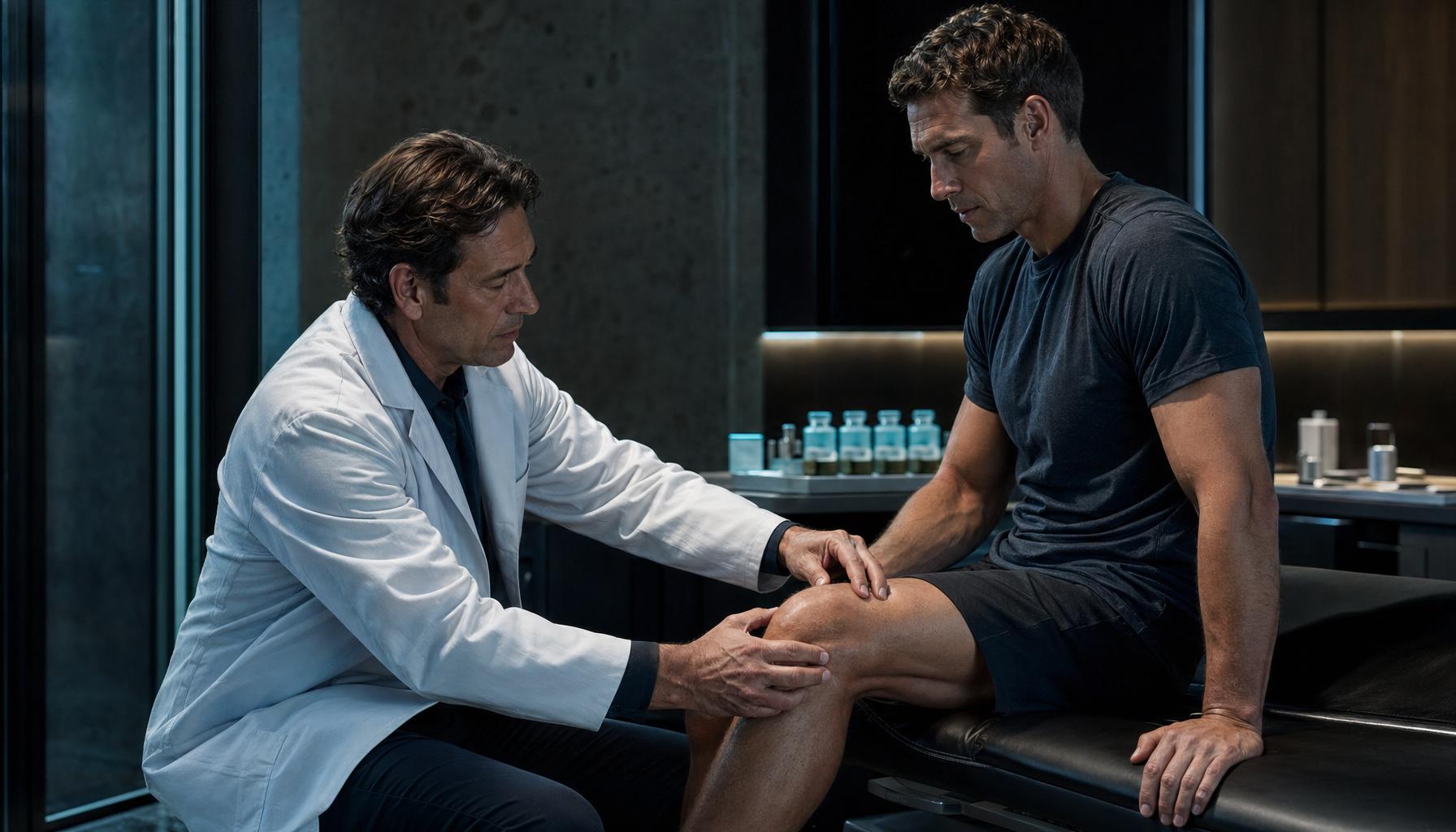
The first step is a 60–90 minute consultation. We review your imaging, history, and goals — and tell you honestly whether regenerative therapy is the right next step.
05 A patient experience
Stem cell treatment fixed a shoulder issue I've dealt with for over 10 years. Finally can work out pain-free — thank you Dr. Abdullah.
JT Peterson Google · 5.0
07What happens at your consultation
A conversation, not a sales meeting.
-
01
Intake & history
60–90 minutes. We review imaging, prior treatments, current medications, and goals. Most of this hour is listening.
-
02
Focused exam
A clinical exam tailored to your indication. Range of motion, strength, functional testing — what the literature actually predicts response on.
-
03
Honest candidacy review
If we think you're a candidate, we'll tell you why. If we don't, we'll tell you what we'd recommend instead — surgery, PT, watchful waiting.
-
04
Written plan & pricing
A defined treatment plan with modality, sequence, follow-up cadence, and total cost — before any commitment.
06 What treatment looks like
What treatment looks like.
Sports protocols are highly individualized. For partial tears: image-guided MSC, exosome, or PRP injection plus structured PT. For post-surgical augmentation: timed injection at or shortly after surgery, in coordination with the operating surgeon. For graft maturation: a series of biologic doses spaced over the rehabilitation arc.
Reassessment is on the rehabilitation timeline — typically 6 weeks, 3 months, 6 months, and a return-to-sport milestone. Functional testing (hop tests, isokinetic strength, KOOS scores) drives the timing of return rather than calendar weeks alone.

09 Common questions
Common questions, answered.
Should I get this before or after my ACL surgery?
Both timing approaches have evidence. We coordinate with your orthopedic surgeon to determine the best window for your specific injury.
Will this help me return to sport faster?
Often yes — particularly for graft maturation after ACL reconstruction and for partial-tear management.
Is this just for athletes?
No — anyone trying to recover faster from injury or surgery can benefit. We see weekend athletes, performance hobbyists, and active adults.
Does my insurance cover this?
Generally not. We discuss costs and financing options before any commitment — never as a sales tactic.
How is this different from PT alone?
Regenerative therapy augments PT, it doesn't replace it. The strongest published outcomes pair regen with structured rehabilitation.
What are the risks?
Mild post-injection soreness is most common. Serious adverse events are rare in the published sports-recovery literature.
08 Coverage & cost
Most regenerative protocols at Apex are not covered by insurance — we discuss pricing directly, in writing, before any commitment. Softwave shockwave is the exception: covered by Medicare Parts A & B with supplement (not by Medicare Advantage). Financing options are available for protocols not covered. We never hold a pricing conversation until we know you're a candidate.
Begin with a consultation.
A conversation about your injury, your goals, your imaging, and whether regenerative therapy is the right tool — alone or alongside the orthopedic care you may need.