Shoulder & rotator cuff
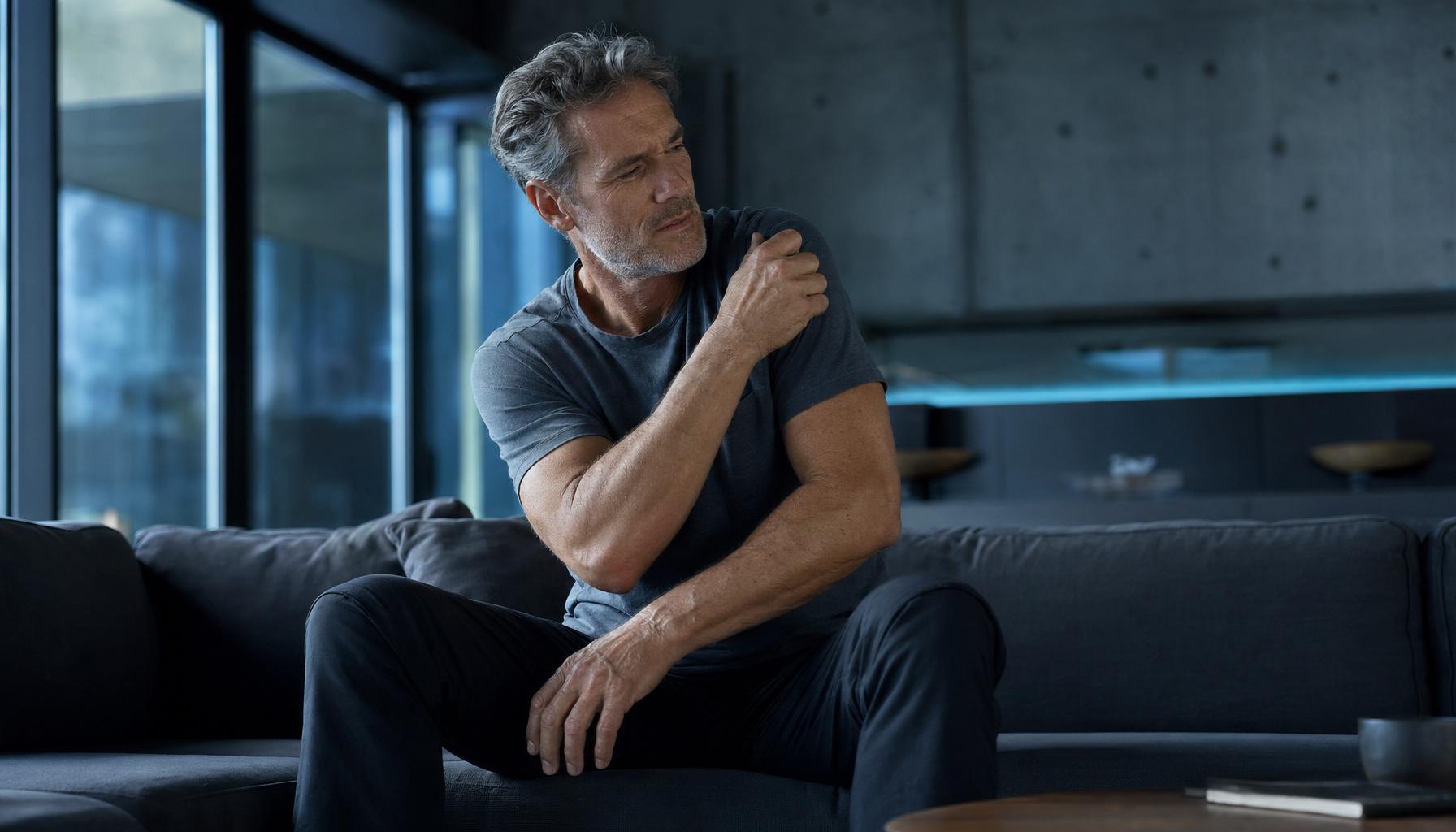
Rotator cuff tendinopathy, partial-thickness tears, and persistent shoulder pain that hasn't responded to conservative care. The shoulder is a complex joint of overlapping tendons, bursae, and capsular tissue — and the right protocol depends on which tissue is failing.
- Class
- Joint · tendon
- Approach
- Image-guided injection
- Materials
- MSC · exosome · PRP
- Adjunct
- Softwave · physical therapy
01 About
What's happening in the shoulder.
Most chronic shoulder pain comes from one of three structures: rotator-cuff tendons (supraspinatus, infraspinatus, subscapularis, teres minor), the long head of the biceps, or the glenohumeral joint capsule itself. Imaging — usually MRI — clarifies which is the pain generator and how degenerated the tissue is.
The conventional pathway runs from physical therapy and anti-inflammatories to corticosteroid injection to surgical repair for full-thickness tears. Regenerative protocols sit best in the middle: tendinopathy and partial-thickness tears, where surgery isn't yet needed but conservative care has plateaued.
02 How it works
How regen supports the cuff.
For rotator cuff tendinopathy and partial-thickness tears, regenerative biologics target the tendon-bone interface — where micro-tears, fatty infiltration, and chronic inflammation degrade healing. MSCs and exosomes signal repair to local tenocytes; PRP delivers growth factors directly to the tendon body.
We typically combine image-guided injection with Softwave shockwave as a complementary modality — the acoustic waves further recruit endogenous repair cells and help break adhesions in chronically irritated tissue.
03 What the research shows
What the studies show.
The shoulder evidence base shows clear positive outcomes for partial-thickness rotator cuff tears and tendinopathy — meaningful pain and function improvement at both 3 months and 12 months across multiple randomized trials.
-
Adipose-Derived Regenerative Cells vs. Corticosteroid for Partial-Thickness Rotator Cuff Tears
Patients with symptomatic partial-thickness rotator cuff tears were randomized to autologous adipose-derived regenerative cells (UA-ADRC) or corticosteroid injection. The cell-therapy group had significantly higher ASES (American Shoulder and Elbow Surgeons) scores at both 3 months and 12 months — with no severe adverse events.
Read on Nature -
Bone Marrow Concentrate & Platelet Products for Rotator Cuff Tears vs. Exercise Therapy
A randomized trial compared injection of bone-marrow concentrate plus platelet products against structured exercise therapy for rotator cuff tears. The biologic group showed greater improvement in shoulder function and pain at midterm follow-up — with comparable safety.
Read on PubMed Central -
Advances in Stem Cell Therapies for Rotator Cuff Injuries
A 2022 review of cell-based therapies for rotator cuff injuries concluded that MSCs lower retear rates and enhance post-repair outcomes, with an excellent safety profile. The mechanism is well-established and the human evidence is consistent with the preclinical data.
Read on Frontiers
The protocols with the strongest published outcomes pair MSC or PRP injection with structured rehabilitation. We will tell you when surgical repair is the better answer — usually for full-thickness tears with significant retraction or fatty atrophy.
04 Are you a candidate
Who's a candidate.
Candidates:
- Rotator-cuff tendinopathy with imaging confirmation and persistent pain.
- Partial-thickness rotator cuff tears that have not responded to PT.
- Mild-to-moderate glenohumeral OA with shoulder stiffness and pain.
- Chronic shoulder pain not responding to conservative care, before considering surgery.
When we will not recommend it:
- Large full-thickness rotator cuff tears requiring surgical repair.
- Severe glenohumeral OA where joint replacement is the appropriate answer.
- Adhesive capsulitis (frozen shoulder) — different mechanism, different treatment.
- Patients without recent imaging — we do not inject the shoulder blind.
Think you might be a candidate?
The first step is a 60–90 minute consultation. We review your imaging, history, and goals — and tell you honestly whether regenerative therapy is the right next step.
05 A patient experience
Stem cell treatment fixed a shoulder issue I've dealt with for over 10 years. Finally can work out pain-free — thank you Dr. Abdullah.
JT Peterson Google · 5.0
07What happens at your consultation
A conversation, not a sales meeting.
-
01
Intake & history
60–90 minutes. We review imaging, prior treatments, current medications, and goals. Most of this hour is listening.
-
02
Focused exam
A clinical exam tailored to your indication. Range of motion, strength, functional testing — what the literature actually predicts response on.
-
03
Honest candidacy review
If we think you're a candidate, we'll tell you why. If we don't, we'll tell you what we'd recommend instead — surgery, PT, watchful waiting.
-
04
Written plan & pricing
A defined treatment plan with modality, sequence, follow-up cadence, and total cost — before any commitment.
06 What treatment looks like
What treatment looks like.
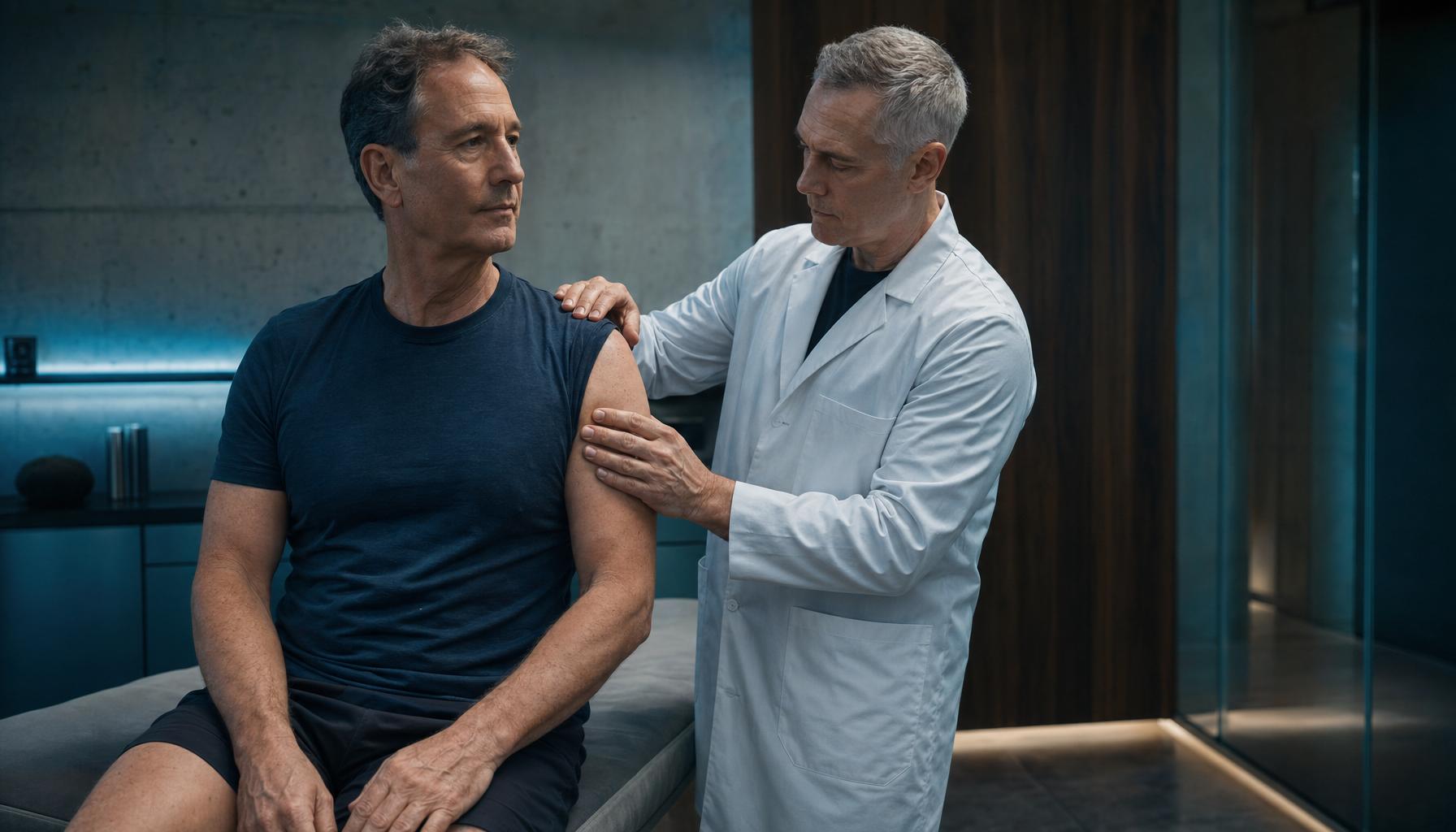
A typical shoulder protocol begins with consultation, MRI review, and a focused exam. Treatment is image-guided injection of cellular and exosome material into the affected tendon or joint, often paired with a Softwave shockwave course over the following weeks. Recovery is light — most patients return to office work the same day.
Reassessment at 3, 6, and 12 months. Functional testing (ROM, strength, ASES) and repeat imaging when indicated. We adjust the protocol on what we observe — additional doses, intensified PT, or surgical referral if the response is insufficient.
09 Common questions
Common questions, answered.
Will this fix my rotator cuff tear?
Partial-thickness tears and tendinopathy respond well. Complete full-thickness tears with retraction usually need surgical repair — and we'll tell you when surgery is the better answer.
Can I keep doing PT during treatment?
Yes — and we recommend it. The strongest published outcomes pair regenerative therapy with structured PT.
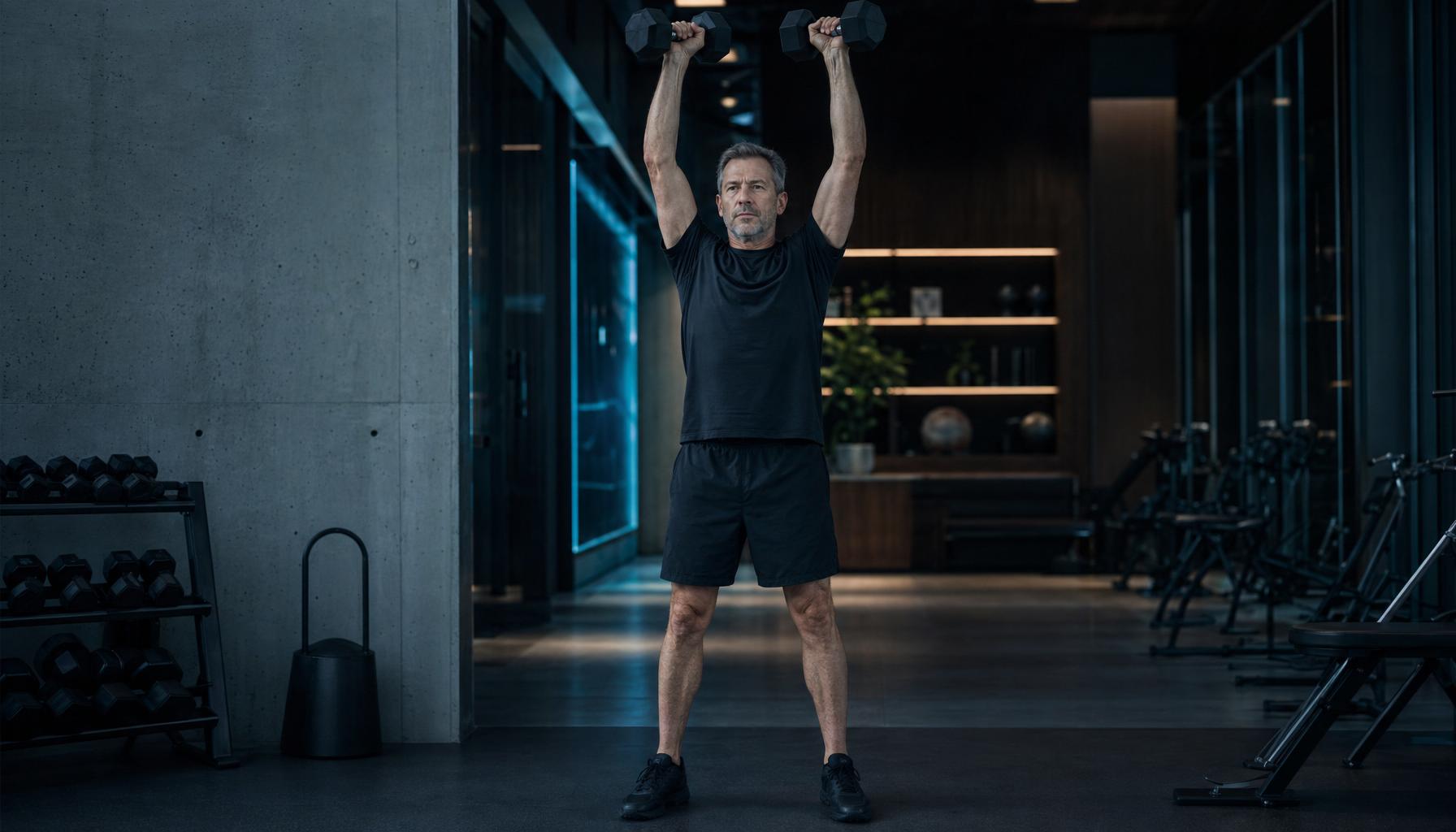
How long until I can lift weights again?
Light upper-body work in 4–6 weeks, full intensity in 12 weeks. We coordinate the timeline with your goals.
How is this different from a steroid shot?
Steroid relieves pain temporarily and can degrade tendon long-term with repeated use. Regenerative therapy supports actual tissue repair.
How many sessions will I need?
Most shoulder protocols are a single image-guided session, often paired with a Softwave shockwave course over 4–6 weeks.
What are the risks or side effects?
Brief post-injection soreness is most common. Serious adverse events are rare across the published RCT data.
08 Coverage & cost
Most regenerative protocols at Apex are not covered by insurance — we discuss pricing directly, in writing, before any commitment. Softwave shockwave is the exception: covered by Medicare Parts A & B with supplement (not by Medicare Advantage). Financing options are available for protocols not covered. We never hold a pricing conversation until we know you're a candidate.
Begin with a consultation.
A conversation about your shoulder, your imaging, and whether regenerative therapy is the right tool — and what we'd recommend if it isn't.