Peripheral neuropathy
Diabetic and idiopathic peripheral neuropathy, post-injury nerve dysfunction. A complex indication where the literature is genuinely mixed — and where we are explicit about what the evidence supports and what it does not.

- Class
- Nerve · recovery
- Approach
- IV systemic + targeted
- Materials
- MSC · exosome
- Coordination
- With endocrinology / neurology
01 About
What peripheral neuropathy is.
Peripheral neuropathy is damage to the peripheral nerves — most commonly the sensory and small fibers in the feet and hands. It typically presents as numbness, burning, tingling, or pain, and may progress to weakness and balance problems. The most common cause is diabetes (diabetic peripheral neuropathy); other causes include chemotherapy, alcohol, B12 deficiency, autoimmune disease, and idiopathic small-fiber neuropathy.
Conventional management focuses on the underlying cause (glycemic control, B12 supplementation, treating autoimmune disease) and symptom management (gabapentin, duloxetine, topical agents). Regenerative protocols sit alongside conventional care — supporting the nerve tissue itself rather than just managing the symptoms.
02 How it works
How regen supports nerve recovery.
Mesenchymal stem cells delivered systemically (IV) modulate inflammation that drives ongoing nerve damage and release neurotrophic factors (BDNF, NGF, VEGF) that support nerve survival and remyelination. Exosome material delivers similar signaling without the live cells. Animal models show consistent improvement in nerve conduction velocity and structural recovery.
This is one of the indications where we are most measured in our claims. Human evidence is positive but heterogeneous. We will tell you what we expect — modest, gradual symptom improvement over months — and what we do not expect, which is reversal of established structural nerve damage.
03 What the research shows
What the studies show.
Diabetic peripheral neuropathy has more clinical trial data than other neuropathy etiologies. The most consistent signal is improvement in nerve conduction velocity (objective electrophysiology) — though the magnitude of clinical symptom improvement varies across studies.
Human Studies of Stem Cell Therapy for Diabetic Peripheral Neuropathy
A 2024 systematic review and meta-analysis of seven randomized controlled trials of MSC therapy for diabetic peripheral neuropathy. Pooled analysis showed significant improvements in motor nerve conduction velocity (+2.2 m/s) and sensory nerve conduction velocity (+1.9 m/s) — objective electrophysiologic improvement, not just symptom reporting.
Read on PubMed CentralLong-Term MSC Therapy and Prevention of Diabetic Complications
A pilot RCT followed 97 patients with type 2 diabetes for 8 years across three groups: bone marrow MSCs combined with mononuclear cells, mononuclear cells alone, or standard medical treatment. At 8 years, only 10.3% of the MSC combination group developed diabetic peripheral neuropathy — versus 48.3% in the control group.
Read on ScienceDirectPDA-002 (Placental Stem Cell-Like) for Diabetic Peripheral Neuropathy
A Phase 2a randomized placebo-controlled trial of PDA-002 (a placental-derived MSC-like cellular product) in 26 patients with diabetic peripheral neuropathy. The product was well-tolerated at both doses — establishing safety and laying the foundation for larger Phase 3 efficacy work.
Read on PubMed
Neuropathy is one of the indications where we are most measured. The data is encouraging, especially for diabetic neuropathy with controlled glycemic management — but it is not a cure for established structural nerve damage.
04 Are you a candidate
Who's a candidate.
Candidates:
- Diabetic peripheral neuropathy with controlled glycemic management.
- Idiopathic small-fiber neuropathy after appropriate workup rules out reversible causes.
- Post-chemotherapy neuropathy in cancer survivors.
- Patients with persistent neuropathic symptoms despite optimal medical management.
When we will not recommend it:
- Patients without a complete neurological workup — the cause matters.
- Active uncontrolled diabetes — fix the glycemic control first.
- Untreated B12 deficiency, hypothyroidism, or other reversible causes.
- Acute compressive neuropathies that need surgical decompression.
- Severe established nerve damage where realistic expectations cannot be set.
Think you might be a candidate?
The first step is a 60–90 minute consultation. We review your imaging, history, and goals — and tell you honestly whether regenerative therapy is the right next step.
05 A patient experience
Dr. Abdullah did an amazing job treating both me and my spouse. I feel less pain every day, and my brain fog is entirely gone. It's only been about 3 weeks.
Kayla Google · Local Guide
07What happens at your consultation
A conversation, not a sales meeting.
-
01
Intake & history
60–90 minutes. We review imaging, prior treatments, current medications, and goals. Most of this hour is listening.
-
02
Focused exam
A clinical exam tailored to your indication. Range of motion, strength, functional testing — what the literature actually predicts response on.
-
03
Honest candidacy review
If we think you're a candidate, we'll tell you why. If we don't, we'll tell you what we'd recommend instead — surgery, PT, watchful waiting.
-
04
Written plan & pricing
A defined treatment plan with modality, sequence, follow-up cadence, and total cost — before any commitment.
06 What treatment looks like
What treatment looks like.
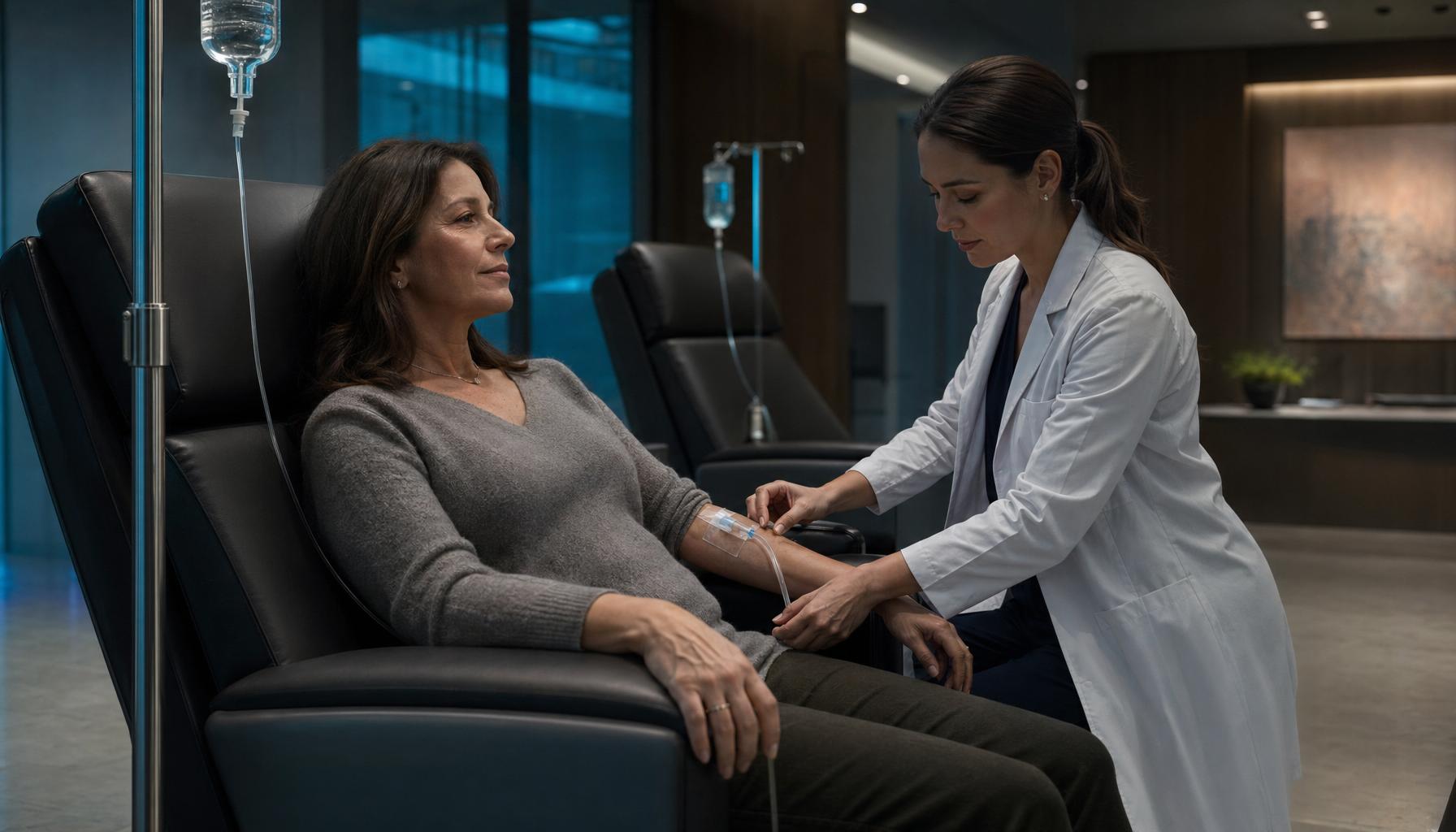
A typical neuropathy protocol begins with a comprehensive workup — labs (HbA1c, B12, TSH, autoimmune panel), nerve conduction studies if not recent, and review of medications. Treatment is IV systemic MSC and/or exosome material, sometimes combined with targeted perineural injection for focal nerve involvement. Repeat doses may be needed.
Reassessment at 3 months, 6 months, and 12 months. Symptom tracking (Michigan Neuropathy Screening Instrument), repeat nerve conduction studies when indicated, and ongoing coordination with endocrinology or neurology.

09 Common questions
Common questions, answered.
Will my numbness go away?
Realistic expectation: gradual symptom improvement over months. Reversal of established structural nerve damage is not guaranteed.
Should I keep taking gabapentin?
Yes — until your neurologist or PCP advises adjusting. Regenerative therapy sits alongside, not instead of, medication.
Does this work for chemo-induced neuropathy?
Yes — though the evidence base is smaller than for diabetic neuropathy. Worth a conversation about realistic expectations.
How long is the protocol?
Typically a series of IV doses spaced over months, with reassessment at 3 and 6 months.
Will this fix my balance problems?
Modest improvement is possible. Balance work in PT alongside regen tends to give the best functional gains.
What are the risks?
IV protocols are well-tolerated. Mild headache or fatigue for 24 hours after infusion is the most common minor effect.
08 Coverage & cost
Most regenerative protocols at Apex are not covered by insurance — we discuss pricing directly, in writing, before any commitment. Softwave shockwave is the exception: covered by Medicare Parts A & B with supplement (not by Medicare Advantage). Financing options are available for protocols not covered. We never hold a pricing conversation until we know you're a candidate.
Begin with a consultation.
A conversation about your neuropathy, your underlying cause, and whether regenerative therapy is the right addition to your existing care — and what realistic expectations look like.