Chronic back & spine pain
Facet-mediated pain, degenerative disc disease, and post-procedural chronic back pain. Recent meta-analyses show meaningful and durable reductions in pain and disability after intradiscal MSC therapy — when the protocol is matched to a documented pain generator.
- Class
- Spine · chronic pain
- Approach
- Image-guided, structured workup
- Materials
- MSC · exosome · PRP
- Required
- MRI before any injection
01 About
What we mean by "back pain."
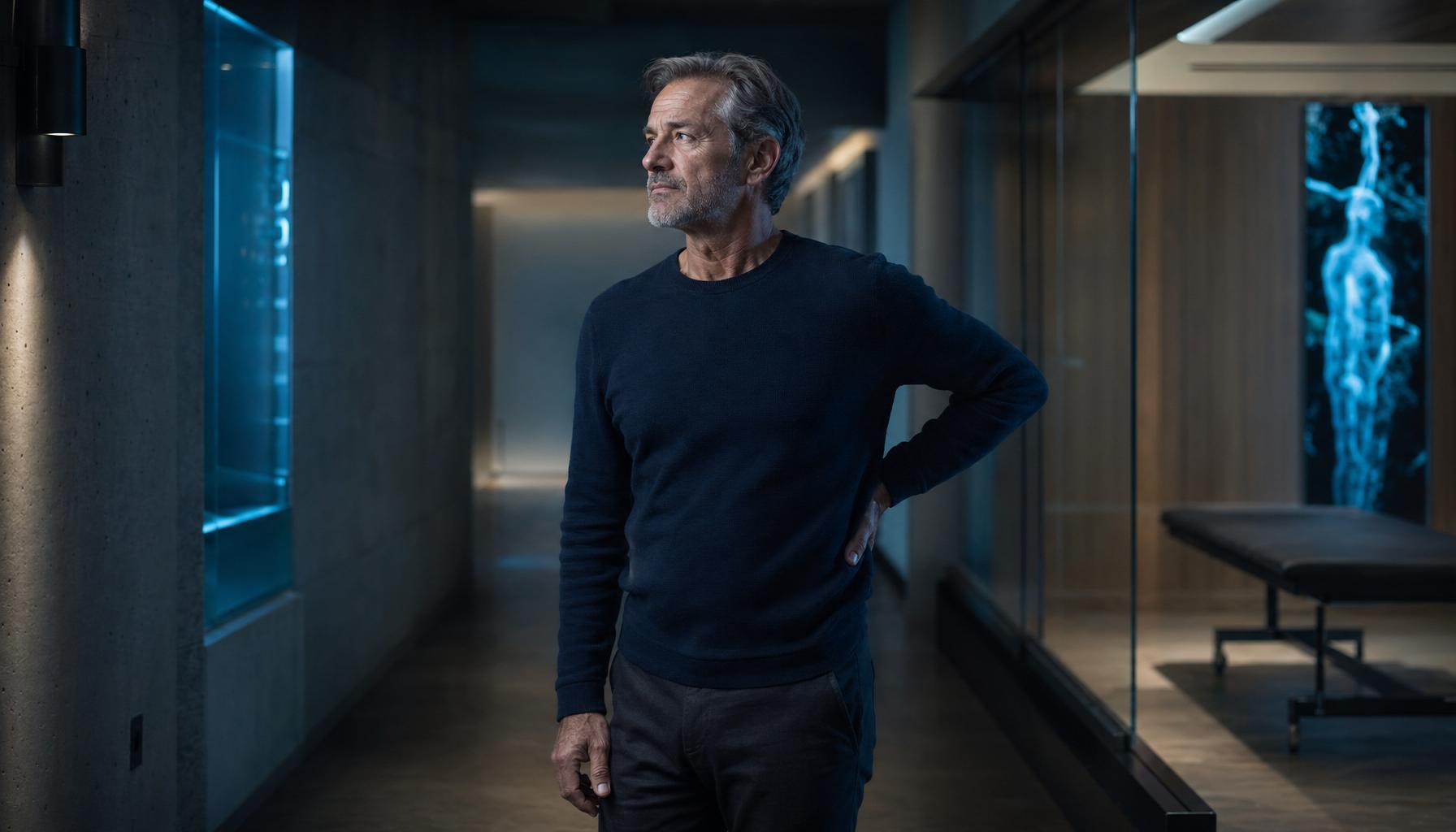
"Back pain" is not one condition. It is a category of distinct pain generators: facet joint arthropathy, degenerative disc disease, sacroiliac joint dysfunction, paraspinal muscle/ligament injury, and radicular pain from nerve root compression. Each has different anatomy, different prognosis, and different appropriate treatments.
The conventional pathway runs from physical therapy and anti-inflammatories to image-guided injections (corticosteroid, RFA) to surgery (discectomy, fusion). Regenerative protocols sit best where the pain generator is a specific, imaging-confirmed structure — a degenerated disc, a painful facet joint, an injured ligament — and where conservative care has plateaued.
02 How it works
How regen supports the spine.
For degenerated discs, intradiscal MSC injection signals to nucleus-pulposus cells, modulates inflammation, and may slow the loss of disc height. For facet arthropathy, intra-articular biologic injection works similarly to other small-joint regen work. For ligamentous and post-procedural pain, PRP and exosome material support local soft-tissue repair.
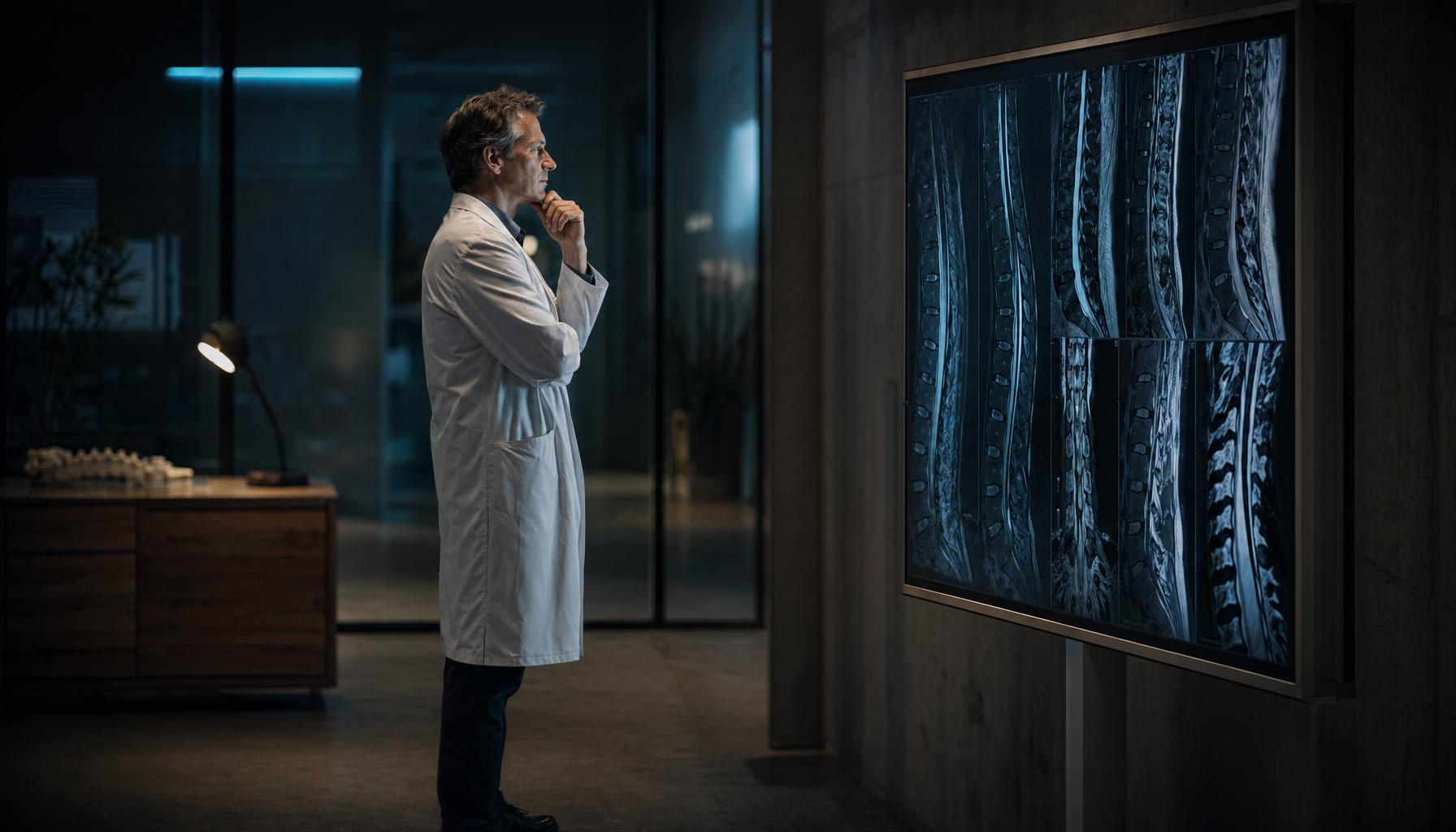
What we will not do is the part that matters most: we do not inject blind. Every spine procedure is preceded by MRI review and (when indicated) diagnostic anesthetic blocks to confirm the pain generator. Candidate selection is what separates the strong outcomes in the published literature from the weaker ones — and we calibrate accordingly.
03 What the research shows
What the studies show.
The spine evidence base has matured into a clear positive signal for the right patient — meaningful pain reduction (VAS) and functional improvement (ODI) at 6, 12, and 24 months following intradiscal MSC therapy.
-
MSCs for Discogenic Pain in Patients with Intervertebral Disc Degeneration
A 2023 systematic review and meta-analysis pooled randomized and observational studies of MSC therapy for degenerative disc disease. Pooled analysis showed significant reductions in pain (VAS) and disability (ODI) — with the strongest effects in patients with moderate, single-level disc disease. Mean VAS reductions of 41.62 in the MSC group across the included data.
Read on PubMed Central -
Low-Dose MSC Therapy for Discogenic Pain: Safety and Efficacy at 1 Year
A 1-year feasibility study of low-dose intradiscal MSC therapy for chronic discogenic pain. 78% of participants reported pain reductions at 12 months, with two-thirds achieving the clinically meaningful threshold (>30% improvement on pain scoring). Strong real-world evidence that the right candidate gets durable improvement.
Read on PubMed Central -
Stem Cell Therapy for Degenerative Disc Disease: Clinical Translation
A 2025 systematic review of stem cell therapy for degenerative disc disease. Multiple published trials demonstrated clinically meaningful improvement in pain and disability within 1 year of MSC injection — with statistically significant gains in VAS and ODI sustained at 6, 12, and 24-month follow-up across the included cohorts.
Read on NASSJ
The strongest spine outcomes come from imaging-led, single-level, moderate-degeneration cases — exactly the candidacy profile we work to identify. The spine is where careful selection separates excellent results from average ones, and we treat it accordingly.
04 Are you a candidate
Who's a candidate.
Candidates:
- Imaging-confirmed mild-to-moderate degenerative disc disease with axial low back pain.
- Facet-mediated pain confirmed by clinical pattern and (when indicated) diagnostic block.
- Chronic post-procedural back pain not improved after appropriate recovery time.
- Patients who have plateaued on PT, NSAIDs, and conservative care.
When we will not recommend it:
- Severe disc collapse with bone-on-bone end-plate change.
- Acute radiculopathy with progressive motor deficit — surgical evaluation, not regen.
- Spinal infection, malignancy, or active fracture.
- Patients without a recent MRI — we never inject the spine without imaging.
- Pain that has not been worked up to identify a specific generator.
Think you might be a candidate?
The first step is a 60–90 minute consultation. We review your imaging, history, and goals — and tell you honestly whether regenerative therapy is the right next step.
05 A patient experience
He's been treating my chronic pain with stem cell treatment and my back has felt 100× better. Definitely recommend.
Hassan Allahrakha Google · 5.0
07What happens at your consultation
A conversation, not a sales meeting.
-
01
Intake & history
60–90 minutes. We review imaging, prior treatments, current medications, and goals. Most of this hour is listening.
-
02
Focused exam
A clinical exam tailored to your indication. Range of motion, strength, functional testing — what the literature actually predicts response on.
-
03
Honest candidacy review
If we think you're a candidate, we'll tell you why. If we don't, we'll tell you what we'd recommend instead — surgery, PT, watchful waiting.
-
04
Written plan & pricing
A defined treatment plan with modality, sequence, follow-up cadence, and total cost — before any commitment.
06 What treatment looks like
What treatment looks like.
A typical spine workup begins with a 60–90 minute consultation, MRI review, and (if needed) diagnostic anesthetic blocks to confirm the pain generator. Treatment is image-guided injection — facet, intradiscal, ligamentous — depending on the diagnosis. Some patients are best served by a sequenced approach (prepare, inject, follow).
Reassessment at 6 weeks, 3 months, 6 months, and 1 year. Functional testing (ODI, VAS) and (when indicated) repeat imaging. The spine takes longer to heal than peripheral joints — patients should expect a 3–6 month window for the response to develop.

09 Common questions
Common questions, answered.
Do I need an MRI first?
Yes — always. We never inject the spine without imaging. The MRI confirms the pain generator and rules out conditions that need surgery instead.
Can this fix a herniated disc?
Targeted intradiscal protocols can support disc health in mild-to-moderate degeneration. Acute disc herniation with neurologic deficits needs surgical evaluation first.
How is this different from a spinal injection?
Standard spinal injections (corticosteroid, anesthetic) are diagnostic or temporary. Regenerative therapy targets the underlying tissue.
What if I already had spine surgery?
Post-surgical chronic pain is one of our common indications. Many post-op patients respond well after a structured workup.
How many sessions will I need?
Highly individualized. Some patients benefit from a single session; others need a sequenced approach. The full plan is defined in writing before commitment.
How long does it take to see results?
Spine healing is slower than peripheral joints — expect a 3–6 month window for the response to develop.
08 Coverage & cost
Most regenerative protocols at Apex are not covered by insurance — we discuss pricing directly, in writing, before any commitment. Softwave shockwave is the exception: covered by Medicare Parts A & B with supplement (not by Medicare Advantage). Financing options are available for protocols not covered. We never hold a pricing conversation until we know you're a candidate.
Begin with a consultation.
A conversation about your back, your imaging, and whether regenerative therapy is the right tool for your specific pain generator.