
Ankle injuries & OA
Chronic ankle instability, post-sprain ligament dysfunction, and tibiotalar osteoarthritis. The most under-treated joint in regenerative medicine — and one where targeted protocols can meaningfully delay surgical fusion or replacement.

- Class
- Joint · soft tissue
- Approach
- Image-guided injection
- Materials
- MSC · exosome · PRP
- Adjunct
- Softwave · PT
01 About
What ankle pain actually is.
Most chronic ankle pain comes from one of three patterns: post-sprain ligament dysfunction (chronic lateral instability after recurrent inversion injury), tibiotalar osteoarthritis (cartilage degeneration in the main weight-bearing joint), or peroneal/achilles tendon involvement around the joint. Imaging — usually weight-bearing X-ray plus MRI — clarifies the dominant pain generator.
The conventional pathway runs from PT and bracing to image-guided steroid injections to ankle arthroscopy or arthrodesis (fusion). Regenerative protocols sit best in the middle — for patients with stable ligamentous instability or mild-to-moderate OA who want to extend the runway before surgical intervention.
02 How it works
How regen supports the ankle.
For tibiotalar OA, intra-articular MSC and exosome injection modulates joint inflammation and supports remaining cartilage — the same mechanism as in other joint OA. For chronic ligamentous instability, PRP and exosome material delivered to the lateral ankle ligaments (ATFL, CFL) supports collagen remodeling.
Ankle work benefits especially from Softwave shockwave as an adjunct — the joint is shallow enough that acoustic energy reaches the entire weight-bearing surface, and the surrounding tendons (peroneals, achilles) often need attention concurrently.
03 What the research shows
What the studies show.
The ankle has fewer published trials than the knee or hip — partly because the joint is anatomically smaller and harder to enroll for, partly because the field has been slower to develop ankle-specific protocols. The available evidence is consistent with broader joint OA findings.
The Role of PRP in the Management of Ankle Osteoarthritis
A 2024 systematic review pooled five studies of PRP for ankle OA (184 patients, mean age 55.7). PRP demonstrated meaningful improvements in pain and function across multiple cohorts — though the evidence base is smaller and less standardized than for the knee.
Read on MDPIChondrogenesis with Autologous Peripheral Blood Stem Cells for End-Stage Ankle Arthritis
A pilot series demonstrated that arthroscopic subchondral drilling followed by post-operative intra-articular autologous peripheral blood stem cell plus hyaluronic acid injections produced meaningful clinical improvement in young patients with end-stage ankle arthritis — preliminary support for combined surgical-biologic protocols.
Read on PubMed Central
The ankle is one of the smaller indication evidence bases — we are appropriately measured about expectations and will tell you if we think your case is more appropriate for orthopedic referral.
04 Are you a candidate
Who's a candidate.
Candidates:
- Mild-to-moderate tibiotalar osteoarthritis with persistent pain on weight-bearing.
- Chronic lateral ankle instability after recurrent sprains, with imaging-confirmed ligament laxity.
- Post-sprain pain that hasn't resolved with PT and bracing.
- Athletes seeking to delay or avoid surgical reconstruction.
When we will not recommend it:
- Severe end-stage tibiotalar OA where fusion or replacement is the right answer.
- Acute complete ligament rupture requiring surgical repair.
- Significant osteochondral lesions of the talus needing surgical management.
- Patients without recent imaging.
Think you might be a candidate?
The first step is a 60–90 minute consultation. We review your imaging, history, and goals — and tell you honestly whether regenerative therapy is the right next step.
05 A patient experience
I broke my foot and the pain after was really hard to deal with. I researched stem cell and exosome combos, and ended up finding Apex. It has made such a huge difference.
Kristen Fehlbaum Google · 5.0
07What happens at your consultation
A conversation, not a sales meeting.
-
01
Intake & history
60–90 minutes. We review imaging, prior treatments, current medications, and goals. Most of this hour is listening.
-
02
Focused exam
A clinical exam tailored to your indication. Range of motion, strength, functional testing — what the literature actually predicts response on.
-
03
Honest candidacy review
If we think you're a candidate, we'll tell you why. If we don't, we'll tell you what we'd recommend instead — surgery, PT, watchful waiting.
-
04
Written plan & pricing
A defined treatment plan with modality, sequence, follow-up cadence, and total cost — before any commitment.
06 What treatment looks like
What treatment looks like.
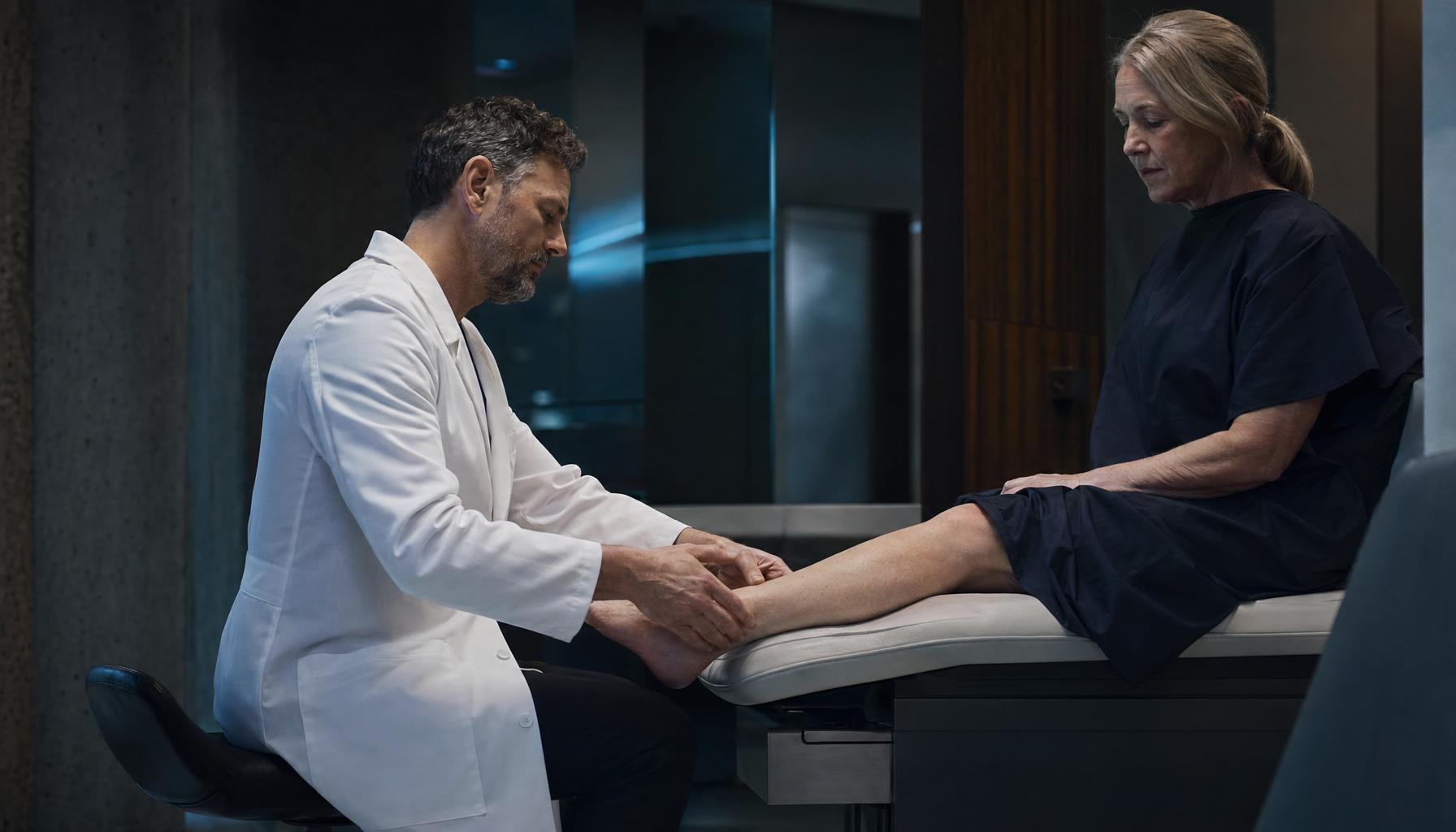
A typical ankle protocol begins with consultation, weight-bearing imaging, and a focused exam (stress testing, gait analysis). Treatment is image-guided injection to the affected joint or ligaments, often paired with a Softwave course. Recovery is light — most patients walk out and resume daily activity the same day with light protective bracing.
Reassessment at 6 weeks, 3 months, and 6 months. Functional testing and (when indicated) repeat imaging. We coordinate with PT for return-to-sport protocols when appropriate.

09 Common questions
Common questions, answered.
Should I get this before fusion surgery?
Often yes — particularly if your fusion candidacy is borderline. Regenerative therapy can extend the runway before surgical intervention.
Can I walk after the procedure?
Yes — typically with light protective bracing for a few days. Most patients return to normal walking within 3–5 days.
Does this work for old sprains that never healed?
Often yes. Chronic ankle instability from healed-but-loose ligaments responds well to combined regenerative and shockwave protocols.
How is this different from a cortisone shot?
Cortisone reduces inflammation temporarily; regenerative therapy supports actual tissue repair. Long-term outcomes favor regen.
How long do results last?
Sustained results at 12+ months in published studies. Periodic redosing may be considered for active patients.
What are the risks?
Mild post-injection soreness for 24–72 hours is most common. Serious adverse events are rare with image-guided allogeneic material.
08 Coverage & cost
Most regenerative protocols at Apex are not covered by insurance — we discuss pricing directly, in writing, before any commitment. Softwave shockwave is the exception: covered by Medicare Parts A & B with supplement (not by Medicare Advantage). Financing options are available for protocols not covered. We never hold a pricing conversation until we know you're a candidate.
Begin with a consultation.
A conversation about your ankle, your imaging, and whether regenerative therapy is the right tool — or whether we'd refer you for orthopedic surgical evaluation instead.